
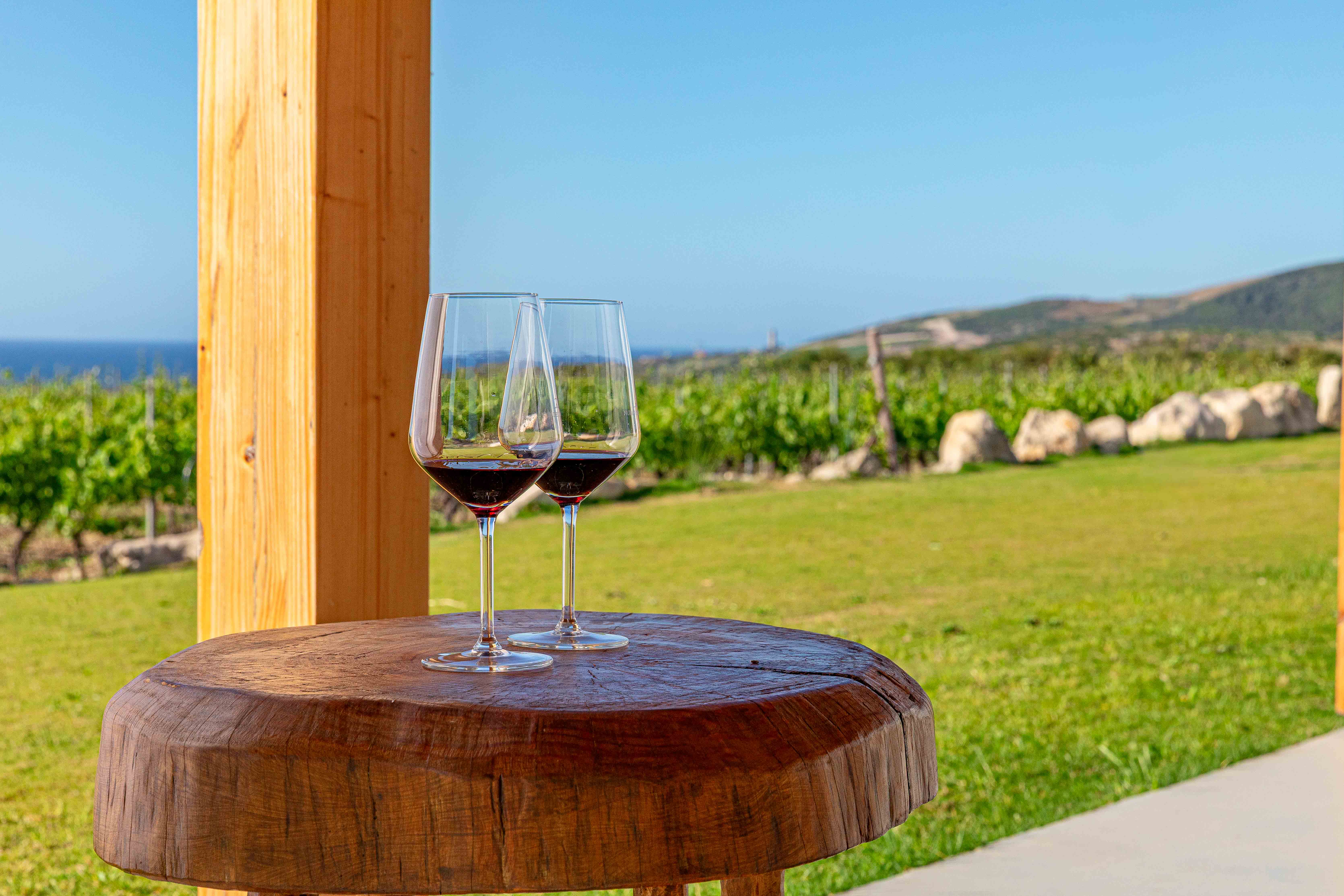
Sardinia does not do wine tourism the way Tuscany does.
There are no signposted routes with brown tourist markers, few tasting rooms designed by architects, and almost nothing that runs on a drop-in basis. What there is instead is a landscape of small, working, often family-run estates where the person pouring your wine is frequently the person who made it — and where turning up unannounced on a Tuesday in October will get you a polite apology, because everyone is in the middle of harvest.
This is better than the alternative, but it requires more planning. Here is how it actually works.
This is the single most common mistake visitors make.
In regions built around wine tourism, tasting rooms keep shop hours and you walk in. Here, most producers are small enough that receiving visitors means someone stops working to do it. A visit is arranged, not stumbled into.
What this means in practice:
The upside is substantial. Instead of a scripted eight-minute pour, you frequently get an hour with someone who can tell you exactly why the wine in your glass tastes the way it does, because they were standing in the vineyard when it was picked.
There is no fixed format, but most visits follow a recognisable shape.
A walk first. Often you'll be taken into the vineyard or the cellar before anything is poured. This is not padding — seeing the soil is the fastest way to understand the wine. In northern Sardinia the ground is frequently pale, coarse decomposed granite, and once you've had a handful of it, the mineral edge in the glass stops being an abstraction.
Then the wines. Typically three to six, moving from white to red, dry to sweet. In this part of the island a sequence might run Vermentino, Torbato, Cagnulari, Cannonau — which happens to be a very good tour of the region in four glasses.
Something to eat. Bread, olives, pecorino, occasionally more. This is not always included, and it's worth asking when you book, because a tasting without food on an empty stomach at eleven in the morning is a poor idea for reasons that will become apparent.
Time. Budget ninety minutes minimum. Two hours is common. If you're planning more than two estates in a day, you are planning too many.
Season. Spring and early autumn are ideal — the countryside looks its best and producers have time. Late summer is the busiest for visitors and the most stretched for staff.
Harvest falls broadly between late August and October depending on grape and site. Visiting then means seeing the cellar at full tilt, which is genuinely exciting, but it also means the people running it have very little attention to spare. Some estates suspend visits entirely. Ask.
Winter is quiet and undervalued. Fewer visitors, more time, and a cellar that smells of the last vintage settling down.
Time of day. Late morning or mid-afternoon. Avoid the middle of the day in summer — outdoors it is genuinely uncomfortable, and heat blunts your palate.
Expect a fee. The era of free tastings has largely ended, and reasonably so: you are being given wine and someone's time.
Prices vary widely with the number of wines, the depth of the visit and whether food is included. Some producers waive or discount the fee against a purchase. The only reliable approach is to ask when you book — and to treat a producer who won't quote a price before you arrive as a mild warning sign.
There is no obligation to buy. Buying if you enjoyed something is normal and appreciated, and if you're carrying wine home, ask about shipping before you start filling a suitcase.
Here is the practical issue that ruins more Sardinian wine days than any other: the vineyards are inland and someone has to drive back.
Italian drink-driving limits are low and enforced, and the calculation is not a fine detail — a genuine tasting across four or five wines is simply not compatible with driving afterwards. Roads here are narrow, winding and unlit at night.
The realistic options are:
One person doesn't drink. Workable, unfair, and it means one of you spends the day watching other people enjoy the thing you came for.
Spit. Standard professional practice, entirely acceptable, and it lets you taste a full range without accumulating anything. Ask for a spittoon — nobody will think less of you; if anything, the opposite.
Don't drive. Public transport to rural estates is effectively non-existent, and taxis over these distances are expensive and hard to arrange for a return trip. Which leaves an organised visit with transport included.
That last option exists because the problem is real, not because someone invented a service to sell. If you want to taste properly, in more than one place, without arithmetic running in the background all afternoon, it's the only version that works.
Don't wear perfume or aftershave. You will be smelling wine in a small room. So will everyone else.
Ask questions. Small producers are almost always pleased to be asked something real. "What's the soil here?" or "Why did you pick this early?" will open a conversation. "What's your best wine?" will not.
Say what you actually think. You will not offend anyone by saying a wine isn't to your taste. You will bore them by saying everything is wonderful.
Don't ask for scores or comparisons to famous regions. "Is this like Chablis?" is a question about somewhere else.
Eat something first. Genuinely.
A day that works looks roughly like this:
Morning. One estate, unhurried. Walk the vineyard while it's still cool. Taste the whites.
Lunch. Somewhere local, unhurried, ideally with a glass of what you tasted in the morning next to food it was made for.
Afternoon. One more estate, different in character from the first — a different grape, a different scale, a different philosophy. Two contrasting visits teach more than three similar ones.
Late afternoon. Back to the coast for the sunset, which after a day inland lands differently.
Two estates. Not five. The temptation to maximise is strong and always wrong: by the fourth tasting your palate is gone and the wines have blurred into one another.
A wine tasting is not primarily about acquiring information. You can read a tasting note anywhere.
What you can only do here is stand on the ground where the vine grew, in the wind that shaped it, and drink the result next to the food that evolved alongside it — served by someone whose family has been doing this for longer than they can conveniently explain. The wine is the excuse. The context is the point.
Which is why doing two of these properly beats doing five of them badly, every time.
We'll take you to discover producers and wineries. Private transfer included.
Discover our experiencesAlmost always, yes. Most producers are small family estates without permanent tasting-room staff, and visits are arranged rather than walked into. A few days' notice is usually enough, more in peak season.
Typically ninety minutes to two hours, often including a walk through the vineyard or cellar. Two estates is a comfortable day; more than that and your palate stops cooperating.
Legally you can, but Italian drink-driving limits are low and strictly enforced, and rural roads are narrow and unlit. Either designate a non-drinking driver, spit rather than swallow, or arrange a visit with transport included.
Spring and early autumn. September and October coincide with harvest, which is atmospheric but also the busiest period for producers — always confirm they are receiving visitors.
Vermentino as the regional benchmark, Torbato as the local speciality found almost nowhere else, Cagnulari as a rescued native red, and Cannonau as the island's flagship.
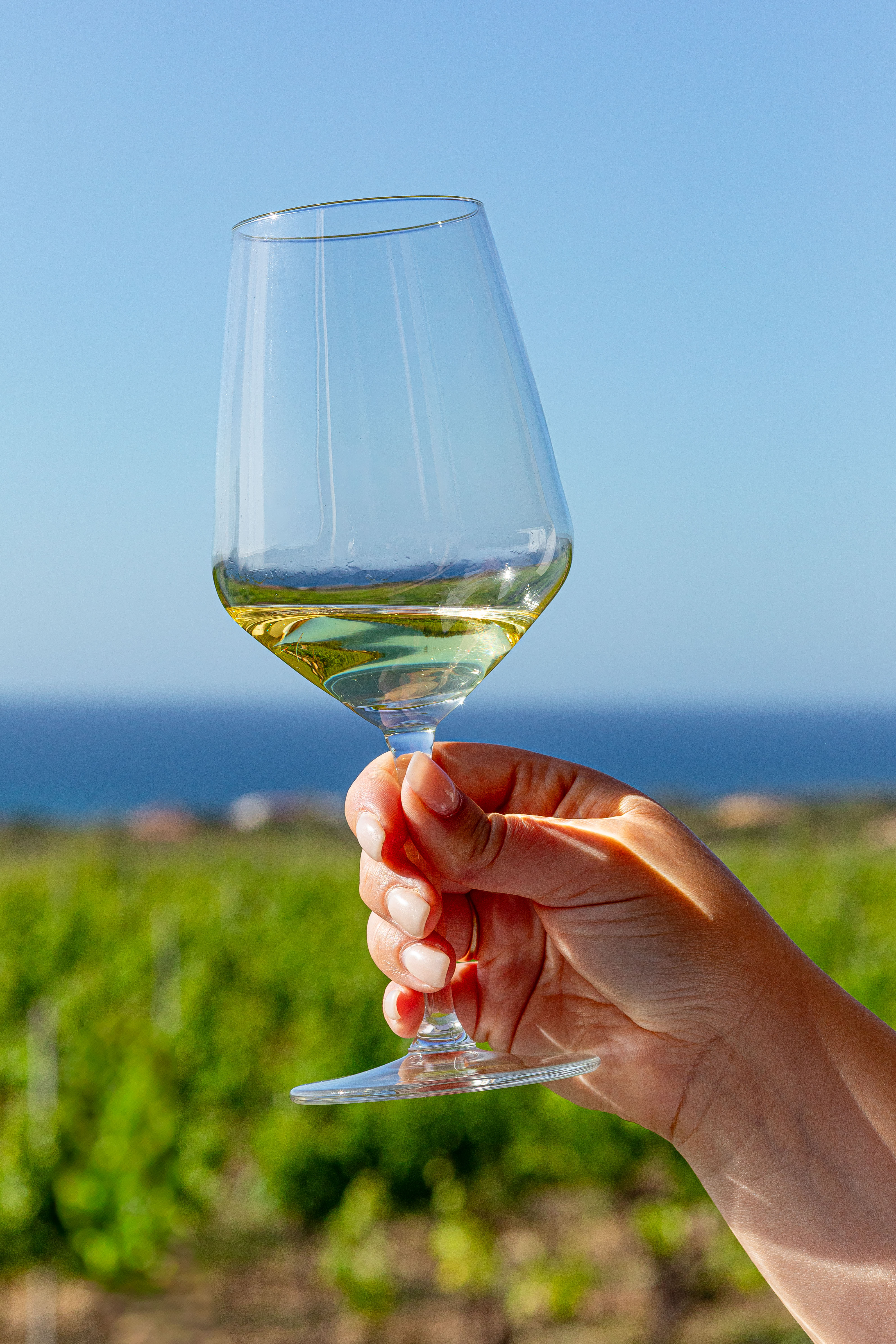
The island's best-loved white wine, from vineyard to glass
Read the article→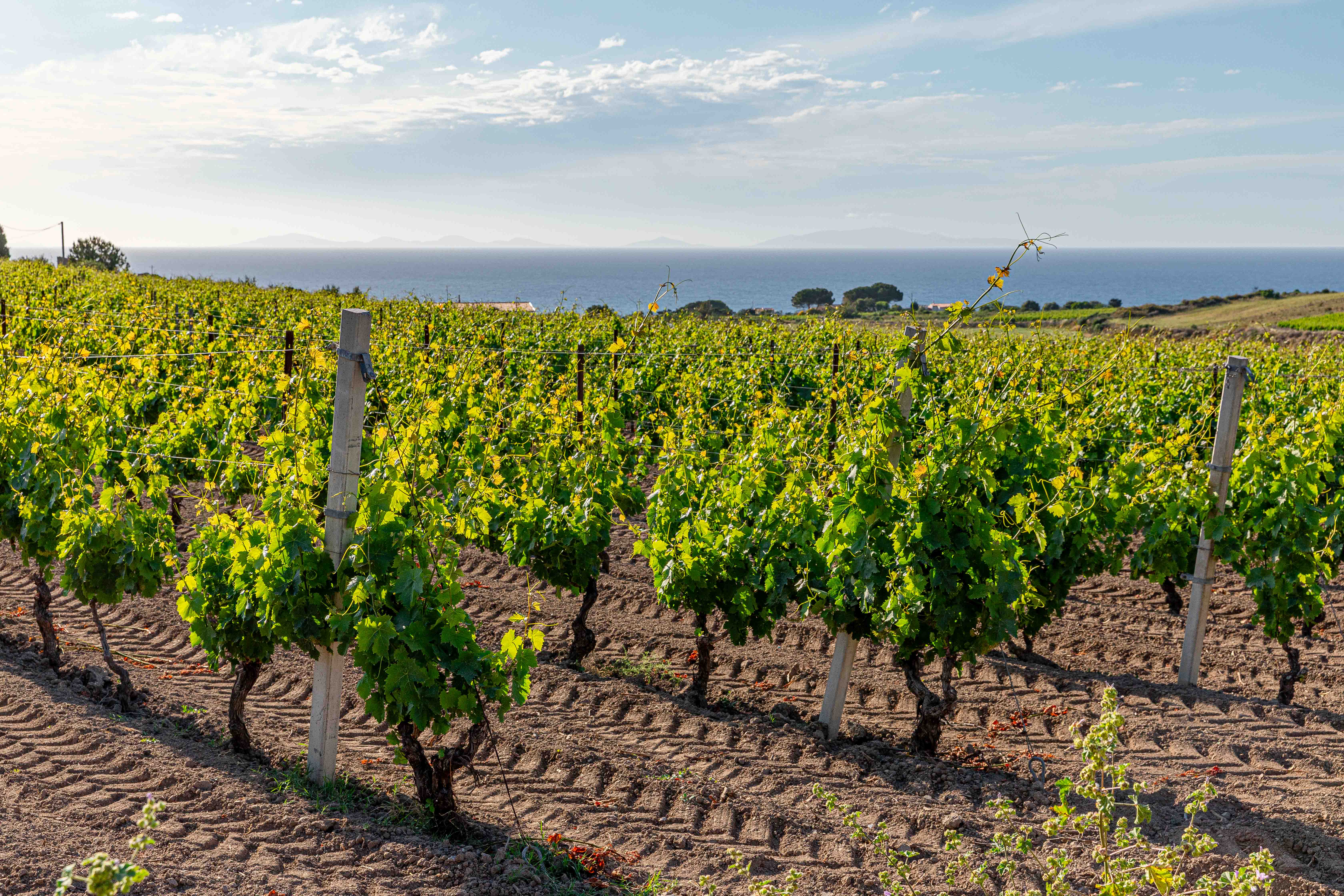
Vermentino, Torbato, Cagnulari: the grapes that grow here and almost nowhere else on earth
Read the article→We take you directly to the producers, with private transfer included and in small groups.
© 2026 Henosis. Tutti i diritti riservati.
Henosis