
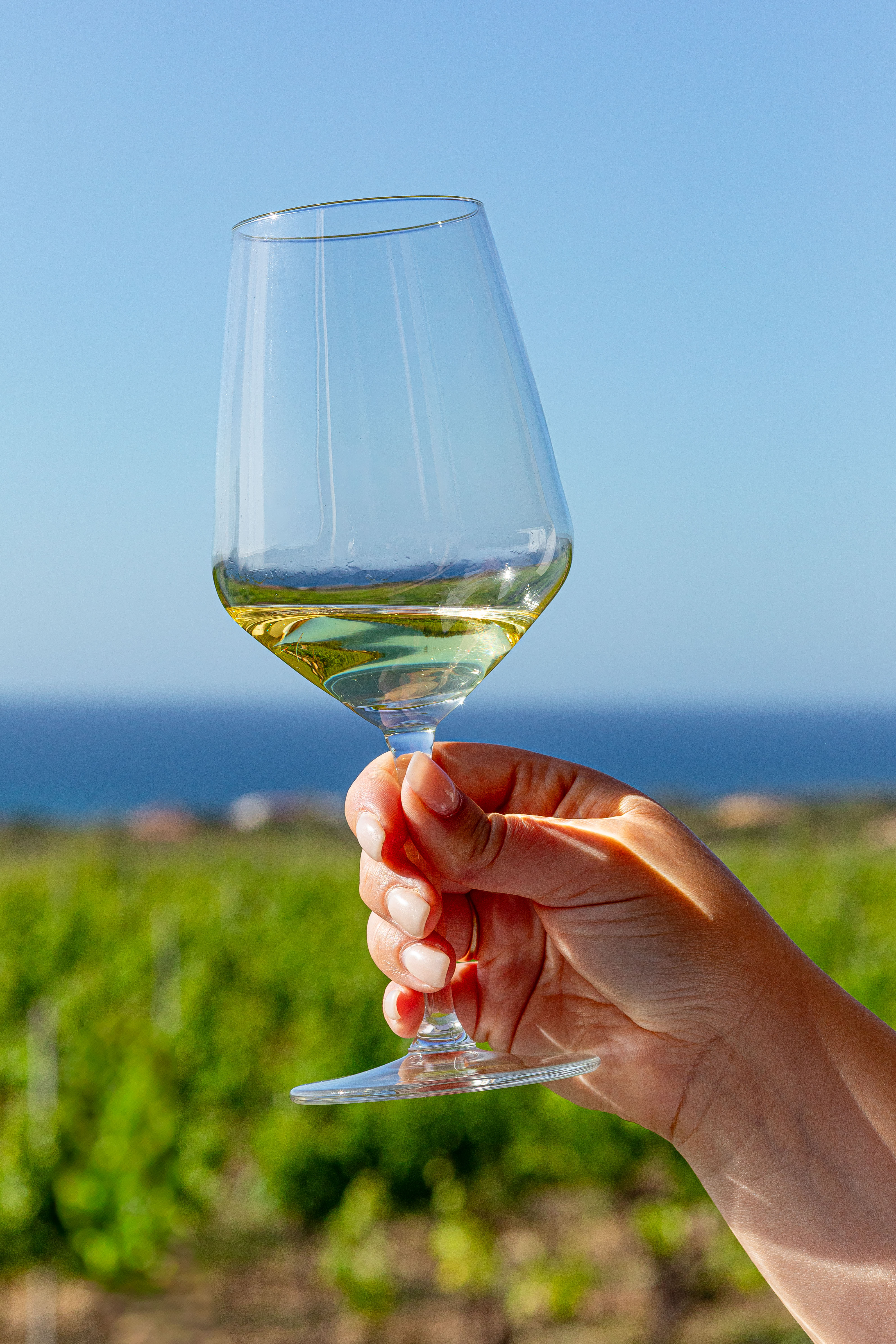
Late August, mid-morning, somewhere inland from Alghero. The mistral has been blowing since dawn and the vines move with it, leaves turning silver as they catch the wind. The soil underfoot is pale and coarse — decomposed granite that crunches like gravel and drains so fast that a summer downpour disappears within the hour. The grapes hanging in the shade are still hard, still green. In three weeks they will be Vermentino.
This is the wine most people mean when they say "Sardinian white." It is also the wine most people misunderstand — assumed to be simple, seasonal, interchangeable with every other Mediterranean white on the shelf. It isn't. Here's what it actually is, how to read a label, how to serve it, and what to put next to it on the table.
Vermentino di Sardegna is a DOC — a protected appellation — and the first thing worth knowing is how large it is. Unlike most Italian denominations, which cover a valley or a cluster of villages, this one covers the entire island. A bottle labelled Vermentino di Sardegna may come from granite hills in the north, from limestone in the centre, or from sandy coastal plains in the south.
That matters for two reasons. It explains why two bottles with the same words on the label can taste noticeably different. And it means the appellation alone tells you less than the producer and the sub-zone do.
The grape itself is grown well beyond Sardinia. It appears in Liguria, in Tuscany along the coast, in Corsica as Vermentinu, and in southern France as Rolle. Its origins are genuinely uncertain — Spain, Corsica and the eastern Mediterranean have all been proposed, and none is settled. Anyone telling you the question is resolved is telling you more than the evidence supports.
What is not in question is where it found its ideal home. Sardinia grows more Vermentino than anywhere else, and the island's northern half in particular produces the version most other regions are measured against.
This is the single most common point of confusion, and it's worth being precise.
Vermentino di Sardegna DOC
Vermentino di Gallura DOCG
Gallura holds Sardinia's only DOCG, the highest tier in the Italian system. The distinction rewards a specific combination: granite bedrock, altitude, and the constant ventilation that comes off the Strait of Bonifacio.
This does not mean every Gallura bottle beats every Sardinia DOC bottle. Some of the most interesting Vermentino on the island is made outside the DOCG boundary by producers who simply have excellent sites. But the classification is a reliable signal of intent, and worth understanding before you buy.
Three factors shape the wine more than anything else.
Granite. In the north, the vines grow on soils weathered from granite — poor, coarse, sharply draining. Poor soil is good news: the vine cannot grow lush, so it puts its energy into fruit rather than leaves. Berries stay small, the skin-to-juice ratio rises, and the concentration follows.
The mistral. The north-westerly wind that scours this coast is not incidental. It keeps the canopy dry, which suppresses fungal disease and reduces the need to spray. It also moderates late-summer heat, slowing ripening enough to preserve acidity that would otherwise burn off. Wines from windy sites tend to be tighter and more precise.
The sea. Vineyards here sit close to salt water, and the marine influence shows up in the glass as a saline, mineral edge on the finish. Whether that's literal salt or the mind reading the landscape into the wine is an argument sommeliers enjoy having. Either way, the sensation is consistent enough to be a marker of the style.
Pour a young Vermentino and the colour is pale straw with a green rim.
On the nose, citrus comes first — lemon zest, sometimes grapefruit — followed by white peach or green apple. Behind the fruit sits something more herbal and drier: rosemary, wild fennel, the resinous scent of Mediterranean scrub after rain.
On the palate it is dry, medium-bodied, with acidity that cuts cleanly without being sharp. There's more texture here than in most Mediterranean whites, a slight weight across the middle of the tongue.
And then the signature: a bitter almond note on the finish. This is the grape's fingerprint. It's not a fault, it's not oxidation, and if you've never noticed it before, look for it — once you've found it, you'll recognise Vermentino blind.
Practical notes
Temperature: 10–12°C. Colder than this and you shut down the aromatics; the fruit disappears and only the acidity remains.
Glass: a medium tulip, not a narrow flute. The wine needs surface area to open.
Decanting: unnecessary for young bottles. For a structured example with a few years on it, twenty minutes in the glass is enough.
Opening ahead: if the bottle comes straight from a cold fridge, give it ten minutes on the table. Most Vermentino is served too cold, which is why so many people find it forgettable.
The common answer is no — drink it young, within a year or two. That's true of most of what's produced, and there's nothing wrong with it: bright, immediate, made for the season.
But it isn't the whole picture. Concentrated examples from low-yield sites, particularly on granite, evolve in ways that surprise people. The citrus recedes; honey, dried herbs and a waxy texture come forward. The almond note deepens and integrates. Three to five years in a cool cellar can produce a genuinely different wine.
The catch is that you can't tell from the label which bottles will do this. Concentration, low yields and a producer who intends the wine to keep are the indicators — and the only reliable way to know is to ask the person who made it.
This is where the wine stops being an abstraction. Vermentino was shaped by the food of its own coastline, and the pairings that work best are the ones that have been on the same tables for centuries.
Bottarga. Cured grey mullet roe, grated over pasta or sliced thin with olive oil. Intensely savoury, slightly bitter, high in salt — and Vermentino's acidity and almond finish meet it exactly. If you try one pairing from this article, make it this one.
Sea urchin. In season, eaten raw with bread. Sweet, iodine-rich, almost impossibly delicate. A young, cold Vermentino keeps it clean.
Fregola with clams. Toasted semolina pasta in a shellfish broth. The wine's texture matches the dish's weight without flattening it.
Raw fish and shellfish generally: crudo, oysters, raw prawns. Acidity and salinity, doing what they do.
Fresh cheeses. Young pecorino, ricotta. Avoid anything long-aged — the wine hasn't got the body for it.
Grilled vegetables and artichokes. Artichokes defeat most wines; the bitter finish here is what makes it work.
What to avoid: heavy cream, long-braised red meat, and anything strongly sweet. Vermentino is an aperitivo and seafood wine, and it doesn't pretend otherwise.
You can buy Vermentino anywhere. But there is a specific pleasure in drinking it within sight of the vines it came from — with the same wind on your face, the same light, and the food it was designed for on the table in front of you. It tastes different there. Not because of anything mystical, but because context is part of what you're tasting.
The hills behind Alghero are one of the best places on earth to do that.
We'll take you to discover producers and wineries. Private transfer included.
Discover our experiencesDry. Vermentino di Sardegna is made as a dry white with fresh acidity and a characteristic bitter almond finish. Sweet Sardinian whites exist, but they come from other grapes.
No. Vermentino di Sardegna is a DOC covering the whole island. Vermentino di Gallura is a DOCG — the only one in Sardinia — restricted to the north-eastern Gallura region, with stricter production rules.
Between 10 and 12°C. Serving it colder mutes the aromatics and leaves only acidity, which is why chilled-to-the-bone Vermentino often tastes thin.
Most bottles are best within one to three years. More concentrated examples, particularly from granite soils, can develop interesting honeyed and waxy character over five years or more.
Seafood above all — bottarga, sea urchin, clams, raw fish — plus fresh cheeses, artichokes and grilled vegetables. The wine's salinity and bitter finish are built for the coastal cooking of its own region.
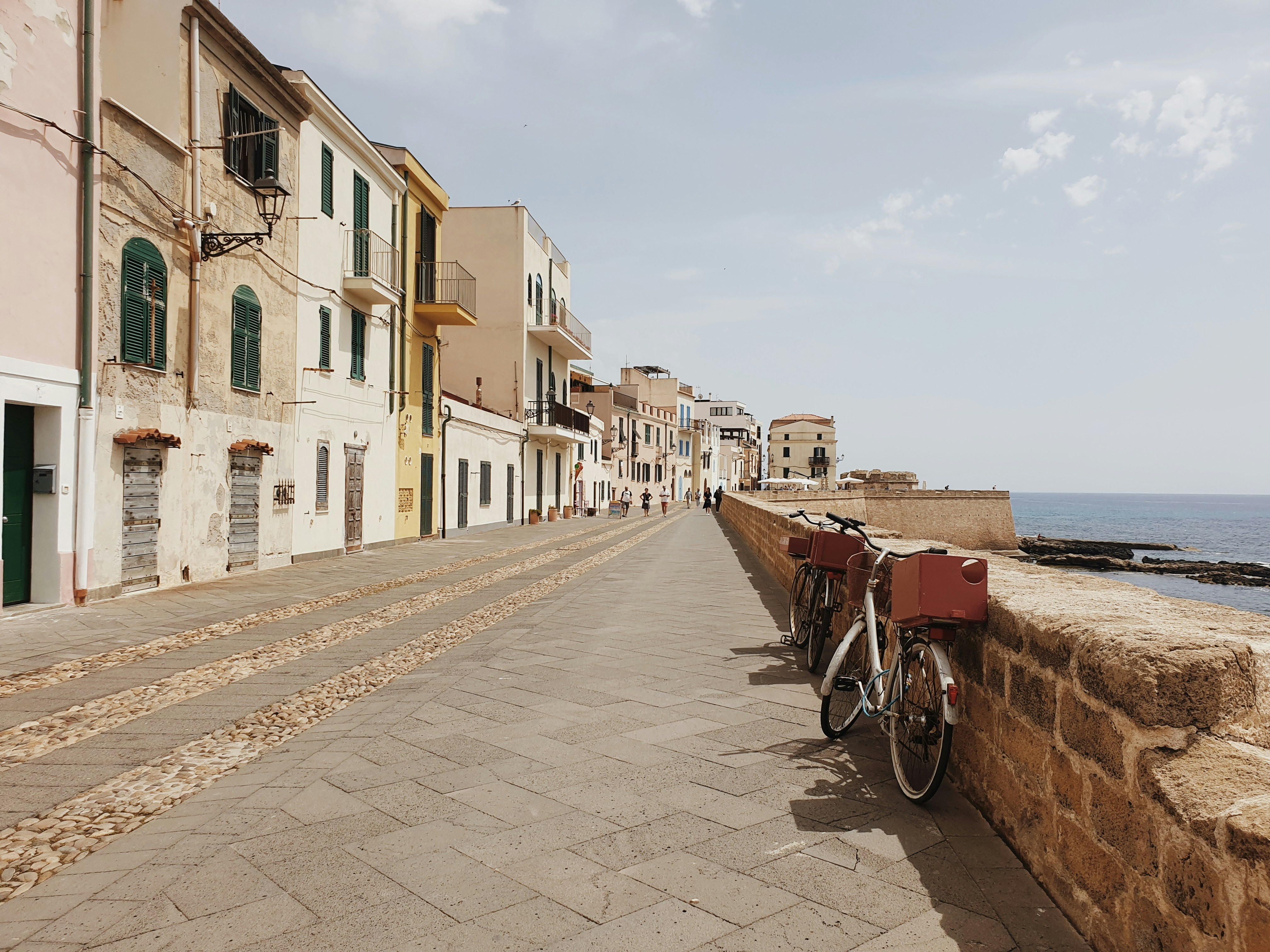
A Catalan old town, Bronze Age towers, sea caves and wine country, all within forty minutes.
Read the article→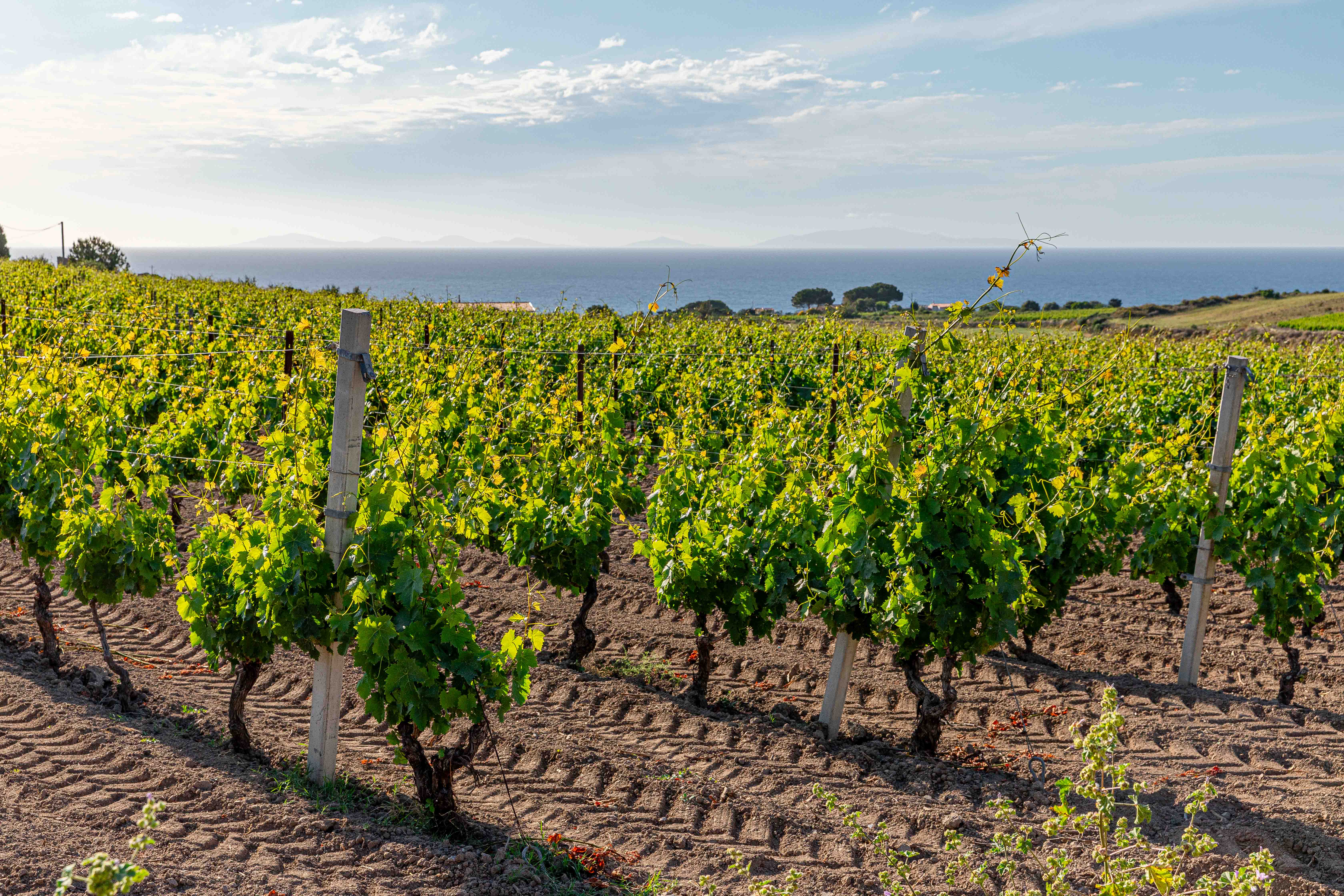
Vermentino, Torbato, Cagnulari: the grapes that grow here and almost nowhere else on earth
Read the article→We take you directly to the producers, with private transfer included and in small groups.
© 2026 Henosis. Tutti i diritti riservati.
Henosis