
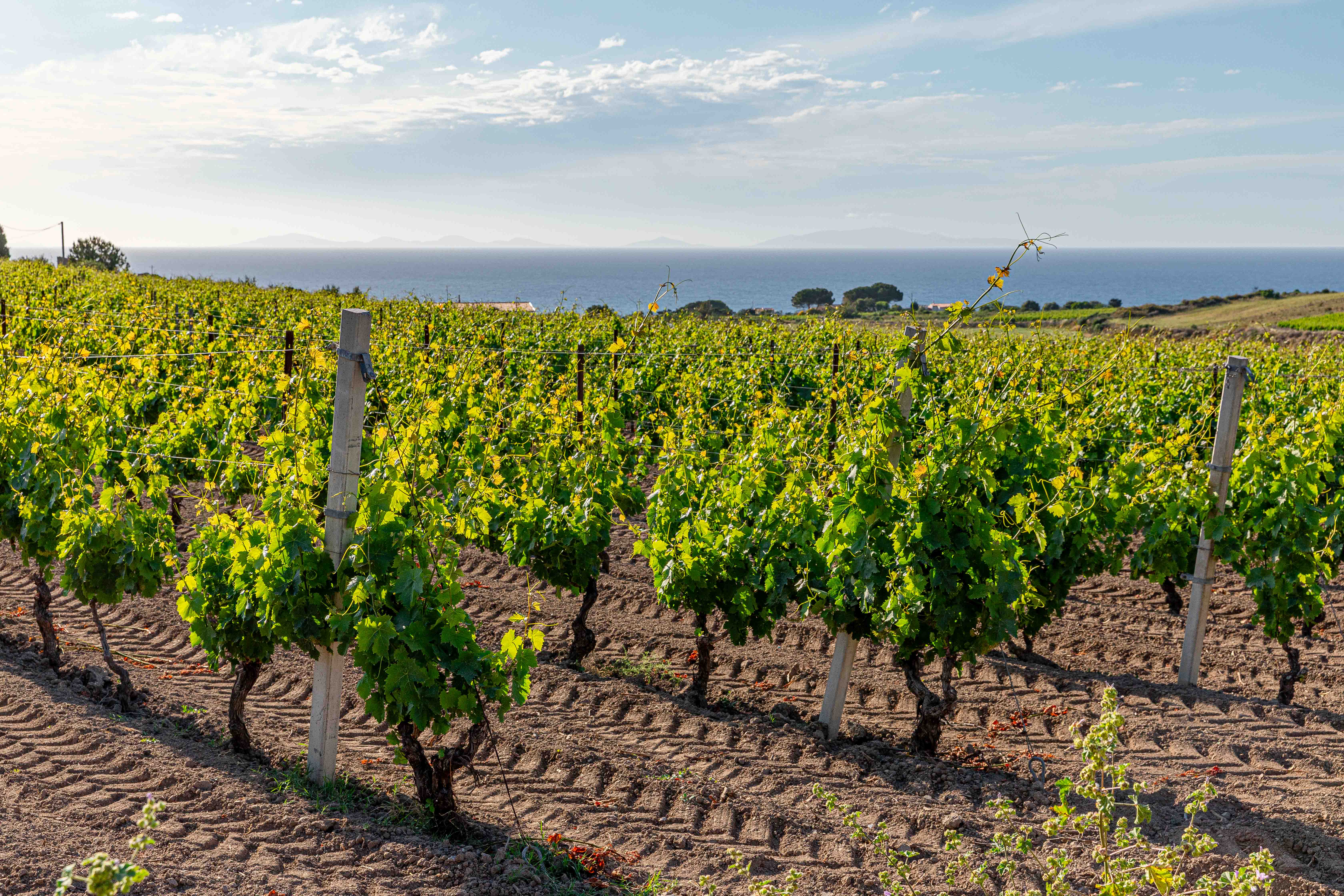
Wine regions tend to converge. Over the last century, growers everywhere planted the same handful of international grapes, because those grapes sold and the local ones didn't. Whole varieties disappeared — not because they made bad wine, but because nobody could pronounce them.
Northern Sardinia is one of the places where that didn't finish happening. The island's isolation, usually treated as an economic misfortune, turned out to be a form of preservation. Grapes that vanished elsewhere are still here, some of them growing nowhere else on earth.
This is a guide to what they are, what they taste like, and which ones are worth going out of your way for.
Three things worked in the region's favour.
Isolation. Sardinia sits far enough from the mainland that agricultural fashion arrived late and left slowly. The economic pressure to replant with Cabernet and Chardonnay reached here decades after it had swept through Tuscany and the Veneto.
Ungrafted vines. Phylloxera, the root louse that destroyed most of Europe's vineyards from the 1860s onward, struggles in very sandy soil. Parts of Sardinia have pockets of sand where old vines survived on their own roots — a rarity in Europe and a genetic reservoir that no replanting programme could reproduce.
Stubbornness. Some growers simply refused to pull out what their grandparents had planted, through decades when doing so made no commercial sense. Several varieties in this article exist today because of a handful of people who wouldn't.
The white grape of the north, and the island's calling card.
Pale straw with a green rim; citrus and white peach on the nose, backed by wild herbs; dry and medium-bodied with a saline edge and a distinctive bitter almond finish. On the granite soils of the north it reaches a concentration it rarely finds elsewhere.
Gallura, in the north-east, holds the island's only DOCG for it. But excellent Vermentino is made across the northern half of the island, including the hills behind Alghero.
Drink it with: bottarga, raw shellfish, fregola with clams, young pecorino.
If you take one thing from this article, take this one.
Torbato is grown around Alghero and virtually nowhere else in Italy. It has a documented relative in Catalonia and southern France — Trobat — which fits the region's history: Alghero was a Catalan city for centuries, and the vine most likely arrived with the people who spoke the language still heard in its old town today.
It came very close to disappearing. Phylloxera, followed by decades in which nobody saw a commercial reason to replant it, reduced Torbato to a handful of plots. Its survival was the result of deliberate work by growers who thought it was worth saving.
In the glass it is drier and more angular than Vermentino, with citrus and white flowers, a firm mineral spine and lower aromatic exuberance — a more restrained wine, and for some palates a more serious one. It also makes excellent sparkling wine, where its natural acidity is an asset.
Drink it with: raw fish, lobster, artichokes, anything from the sea served simply.
Why it matters for a visitor: this is a wine you cannot easily buy at home. Of everything on this list, Torbato is the one worth carrying back in your luggage.
A red grape from the countryside around Sassari and Usini, in the north-west. Like Torbato, it nearly went extinct — reduced at one point to scattered old plots kept going by a small number of growers.
The wine is medium-bodied, deep ruby, with red and black berry fruit, a herbal note that reads as Mediterranean scrub, soft tannins and a savoury, faintly bitter finish. It is more approachable than Cannonau and less structured, which makes it dangerously easy to drink.
If you want to understand what "native variety" means in practice — a wine that tastes like a place and nothing else — Cagnulari is a better teacher than anything more famous.
Drink it with: roast pork, grilled lamb, aged pecorino, tomato-based pasta.
Grown across Sardinia, including the north. Genetically, Cannonau is the same variety as Grenache and Garnacha, though whether it travelled from Spain to Sardinia or the other way round is still debated — and the debate is not close to settled, despite how confidently it is sometimes reported.
The wine is warm and generous: ripe red fruit, dried herbs, a note of tobacco or leather with age, moderate tannin and noticeable alcoholic warmth. Northern examples tend to be slightly fresher than those from the mountainous interior.
You will hear Cannonau linked to Sardinian longevity and to the island's status as a "Blue Zone." Treat that carefully. The population data is real; the causal claim that a particular wine explains it is not established, and the healthiest thing about the Sardinian diet is almost certainly not the alcohol.
Drink it with: roast suckling pig, game, aged cheese, slow-cooked meat.
Two villages north of Sassari have their own Moscato appellation — a sweet, aromatic white made in small quantities and rarely seen outside the area.
It is floral and grapey, with orange blossom and honey, sweet without being cloying, and it belongs at the end of a meal with almond pastries or seadas, the fried cheese-filled dessert drizzled with honey.
Production is small and distribution is local. This is a wine you find by being there.
South of Alghero along the coast, around the town of Bosa, a very different wine is made: Malvasia, in an oxidative style, aged in partly filled barrels where a film of yeast develops on the surface of the wine.
The result is nutty, dried-fruited, with an almost saline intensity — closer in spirit to a Sherry or a vin jaune than to anything else on this list. It exists in both drier and sweeter versions, and it is not a beginner's wine. It is, however, one of the most distinctive things made anywhere in Italy.
Bosa itself is about an hour down the coast from Alghero on one of the most spectacular roads in the Mediterranean, which makes the trip an easy argument to win.
Alongside the variety-specific appellations, there is an Alghero DOC: a territorial denomination covering the area around the city, under which producers can bottle a range of wines including Torbato and Cagnulari.
For a visitor, the practical takeaway is that a label reading "Alghero" tells you about geography, while a label reading "Vermentino di Gallura" tells you about a specific grape and a specific stricter set of rules. Both are useful; they are answering different questions.
If you have a limited number of glasses, this is the order that teaches you the most:
Five wines, and you will have covered more genuine variety than most European regions can offer in twenty.
Native grapes are not automatically better. Some varieties disappeared for good reasons. But a wine that grows in one place and nowhere else carries information that no international variety can: about the soil, the wind, the people who kept planting it when it made no economic sense.
That's the real argument for drinking Torbato in Alghero rather than Chardonnay. Not that it's better — that it's from here, and there is nowhere else to get it.
We'll take you to discover producers and wineries. Private transfer included.
Discover our experiencesVermentino is the region's signature white and the most widely planted. For something found almost nowhere else, Torbato — grown around Alghero — is the distinctive local speciality.
Genetically yes, they are the same variety. Whether it originated in Spain or Sardinia remains an open question among researchers.
Torbato. It is grown almost exclusively around Alghero and is hard to find outside the island, unlike Vermentino and Cannonau which are widely exported.
A native red grape from the Sassari area of north-west Sardinia. It nearly disappeared and survives thanks to a small number of growers. The wine is medium-bodied, fruit-forward and softly tannic.
Yes. Moscato di Sorso-Sennori is an aromatic sweet white made near Sassari, and Malvasia di Bosa, made in an oxidative style down the coast, is one of Italy's most unusual wines.
The rare white grape that vanished everywhere else and survives only in Alghero.
Read the article→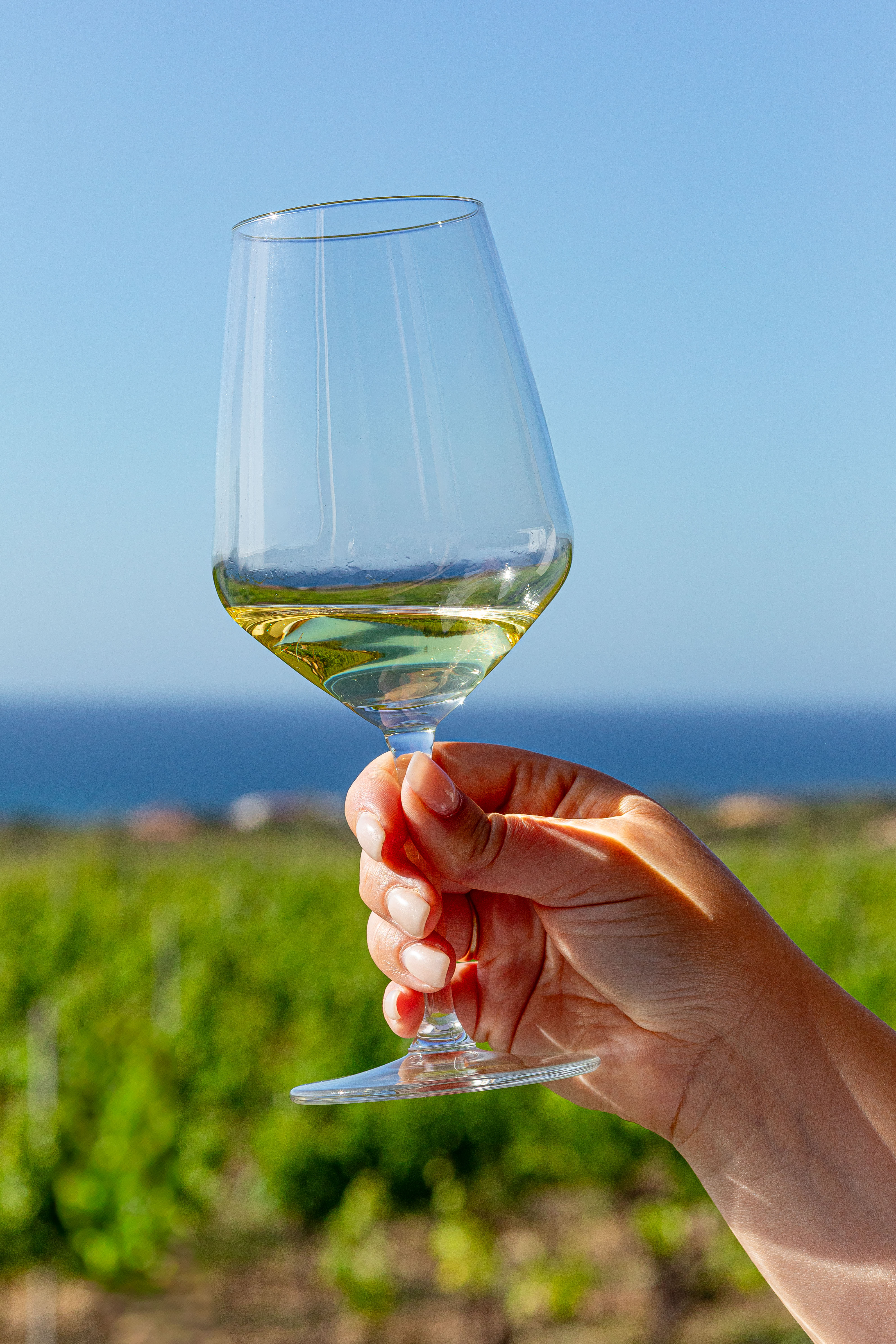
The island's best-loved white wine, from vineyard to glass
Read the article→We take you directly to the producers, with private transfer included and in small groups.
© 2026 Henosis. Tutti i diritti riservati.
Henosis