
.jpg)
Step off the plane in the north-west of Sardinia, wander into the old town of Alghero, and something won't add up. The street signs are in two languages, and the second one isn't Italian — it's Catalan. Carrer, not via. The old men on the benches by the harbour aren't speaking Sardinian, and they aren't speaking Italian either. Locals call their town not Alghero but l'Alguer, and they'll tell you, with some pride, that this is Barceloneta — little Barcelona.
You're in Italy. So why does this one city, on an island famous for being fiercely, distinctly Sardinian, speak the language of a region five hundred kilometres away on the Spanish mainland? The answer is one of the most remarkable survival stories in the Mediterranean, and it begins with an act of medieval violence.
In the fourteenth century, the Crown of Aragon — the powerful kingdom based in Barcelona — was expanding across the western Mediterranean, and Sardinia sat squarely on its trade routes. Alghero, then a fortified port founded by the Genoese Doria family, was too well-placed to ignore.
The Aragonese took the city by force in the early 1350s, under King Peter IV of Aragon, known as "the Ceremonious." But taking Alghero and holding it proved to be two different things. The local Ligurian and Sardinian inhabitants rose in revolt against their new rulers, and the resistance was stubborn enough that the king reached a drastic decision — one that would shape the city for the next six hundred years.
Peter IV's solution was radical: rather than rule a hostile population, he would replace it. The original inhabitants of Alghero were expelled, and Catalan-speaking settlers were brought in to take their place — a process that took hold from the 1370s. The new arrivals came mostly from the Camp de Tarragona, with smaller contingents from Barcelona, Valencia and the Balearic Islands. They were offered privileges to settle.
This is the crucial point, and it's what makes Alghero unique. This wasn't a gradual cultural influence, the kind of soft borrowing that happens wherever peoples trade and mingle. It was a near-total population transplant. Overnight, in historical terms, Alghero stopped being a Ligurian-Sardinian town and became a Catalan one — a piece of Catalonia deposited whole onto a Sardinian shore. The language didn't seep in. It was installed.
Here's the real mystery. Languages planted by conquest usually dissolve within a few generations, absorbed by the surrounding country. Catalan in Alghero did the opposite: it dug in and lasted six centuries. Two things explain it.
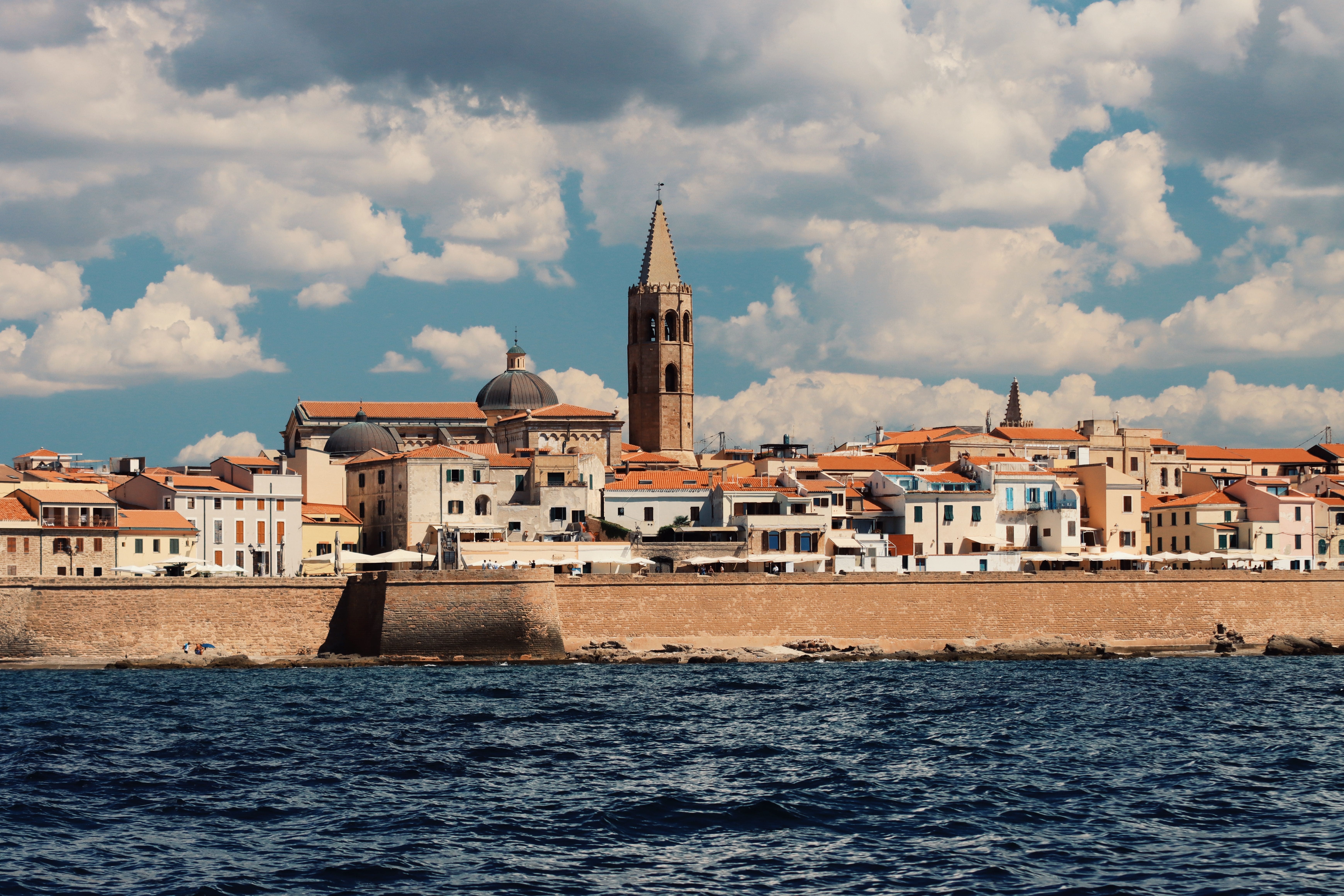
The walls. Alghero was a fortified city, and its ramparts — the same ones tourists walk at sunset today — did more than keep enemies out. They physically separated the Catalan-speaking town from the Sardinian-speaking countryside around it. Inside the walls, one language; outside, another. That isolation let Algherese crystallise and endure while Sardinian evolved separately just a few kilometres away.
Distance from home. Cut off from mainland Catalonia by the sea, the Alghero dialect stopped keeping pace with the language back on the Iberian Peninsula. It became a kind of linguistic time capsule — alguerès, an archaic branch of Eastern Catalan that preserves grammatical forms and vocabulary that have since changed or vanished in modern Catalonia. Linguists prize it for exactly this reason: it's a window onto an older Catalan, frozen by geography.
Even as the wider political tides turned — Catalan gave way to Spanish as the official language, and then to Italian by the mid-eighteenth century — the everyday speech of Alghero held on. Remarkably, the dialect remained in widespread daily use right up until at least the 1970s.
The honest picture today is a mixed one. Centuries of Italianisation have made Italian the dominant language of Alghero — by the mid-2000s it was the first language of roughly 60% of residents, and the everyday use of Algherese has declined, especially among the young. You'll hear it, but less than you would have fifty years ago.
At the same time, there's a real effort to hold the line. In 1997 the Regional Council of Sardinia officially recognised Algherese Catalan, giving it a semi-official status alongside Italian and a mandate to promote its use. Cultural associations, festivals, local publishing and school initiatives all work to pass it on. Whether that's enough to reverse the slow tide of language shift is an open question — but the city is far from letting go of what makes it different.
Spotting the Catalan in Alghero
The street signs. The old town is signed bilingually — look for carrer (street) and the Catalan place names alongside the Italian.
The name. Locals call the city l'Alguer and themselves algueresos. You'll see it on shopfronts and posters.
The food. The Catalan legacy is on the plate too — most famously aragosta alla catalana, lobster served the Catalan way.
The layout. The walled old town was built to feel like a medieval Catalan city, and it still does — a piece of the Iberian Mediterranean on Sardinian soil.
Listen. Sit near the harbour or the old squares in the early evening and you may still catch the language spoken among older residents.
It would be easy to treat Alghero's Catalan as a quaint footnote — a fun fact for the guidebook. It's more than that. It's the living evidence of a moment when a medieval king redrew a city by decree, and of six centuries in which the people he moved there refused to become anything other than what they were. Every bilingual street sign is a small act of memory. When you walk the ramparts at sunset, you're not just looking at a pretty view — you're standing on the wall that kept a language alive. That's the thing about Alghero: it doesn't just have history. It still speaks it.
We'll take you to discover producers and wineries. Private transfer included.
Discover our experiencesBecause in the 14th century the Crown of Aragon conquered the city, expelled its original inhabitants after repeated revolts, and repopulated it with Catalan-speaking settlers from around Tarragona, Barcelona, Valencia and the Balearics. Their language took root and has survived for six centuries.
It's called Algherese, or alguerès — an archaic variety of Eastern Catalan. Because Alghero was cut off from mainland Catalonia, the dialect preserves older grammatical forms and vocabulary that have since changed in modern Catalan.
Yes, but less than it once was. Italian is now the dominant language, spoken as a first language by around 60% of residents, and everyday use of Algherese has declined. Since 1997 it has had official regional recognition, and cultural and school initiatives work to keep it alive.
Locals call it Barceloneta because of its deep Catalan heritage — the language, the walled old town built in the style of a medieval Catalan city, and its historical ties to Catalonia.
Look for the bilingual street signs (carrer rather than via), use of the name l'Alguer, the medieval walled old town, and Catalan-influenced dishes like lobster alla catalana. Older residents can still be heard speaking the dialect around the harbour and old squares.
Three unhurried days in Alghero: old town, sea cliffs, wine country and the food worth staying for.
Read the article→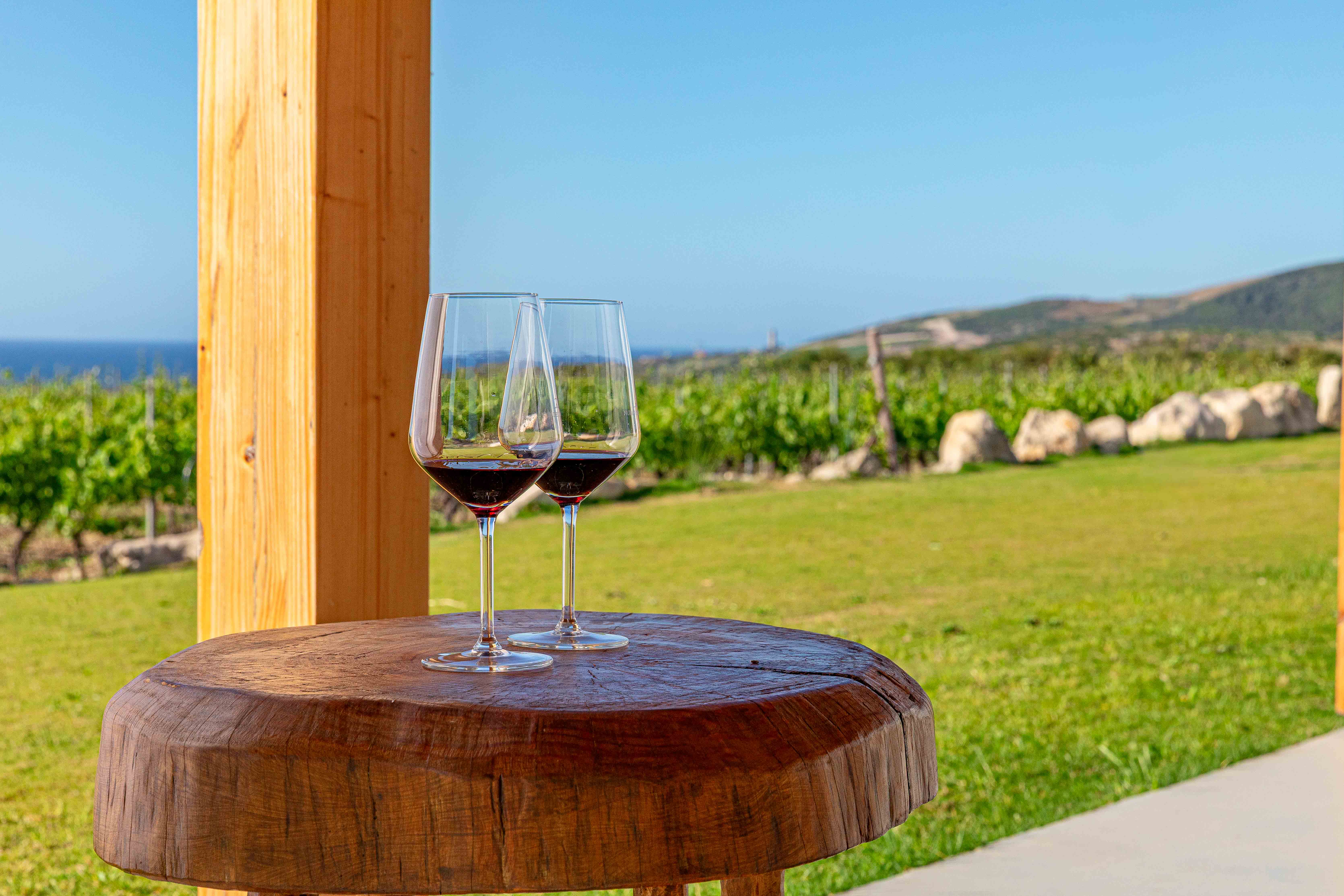
No signposted routes, no walk-ins: wine tasting in Sardinia works differently. How to book it, what to expect, and the problem nobody plans for.
Read the article→We take you directly to the producers, with private transfer included and in small groups.
© 2026 Henosis. Tutti i diritti riservati.
Henosis