
Most people come to Alghero for the water, and they are not wrong to. But there is a particular moment — usually the third or fourth afternoon, usually when the sun has become an argument rather than a pleasure — when the beach stops being enough.
That moment is when Alghero gets interesting. Because this is not a resort that happens to have a town attached. It is a walled Catalan city on a Sardinian coast, surrounded by Bronze Age monuments, sea caves, a protected forest and some of the island's best vineyards — and almost all of it sits within forty minutes of the old town.
Here is what to do with that afternoon.
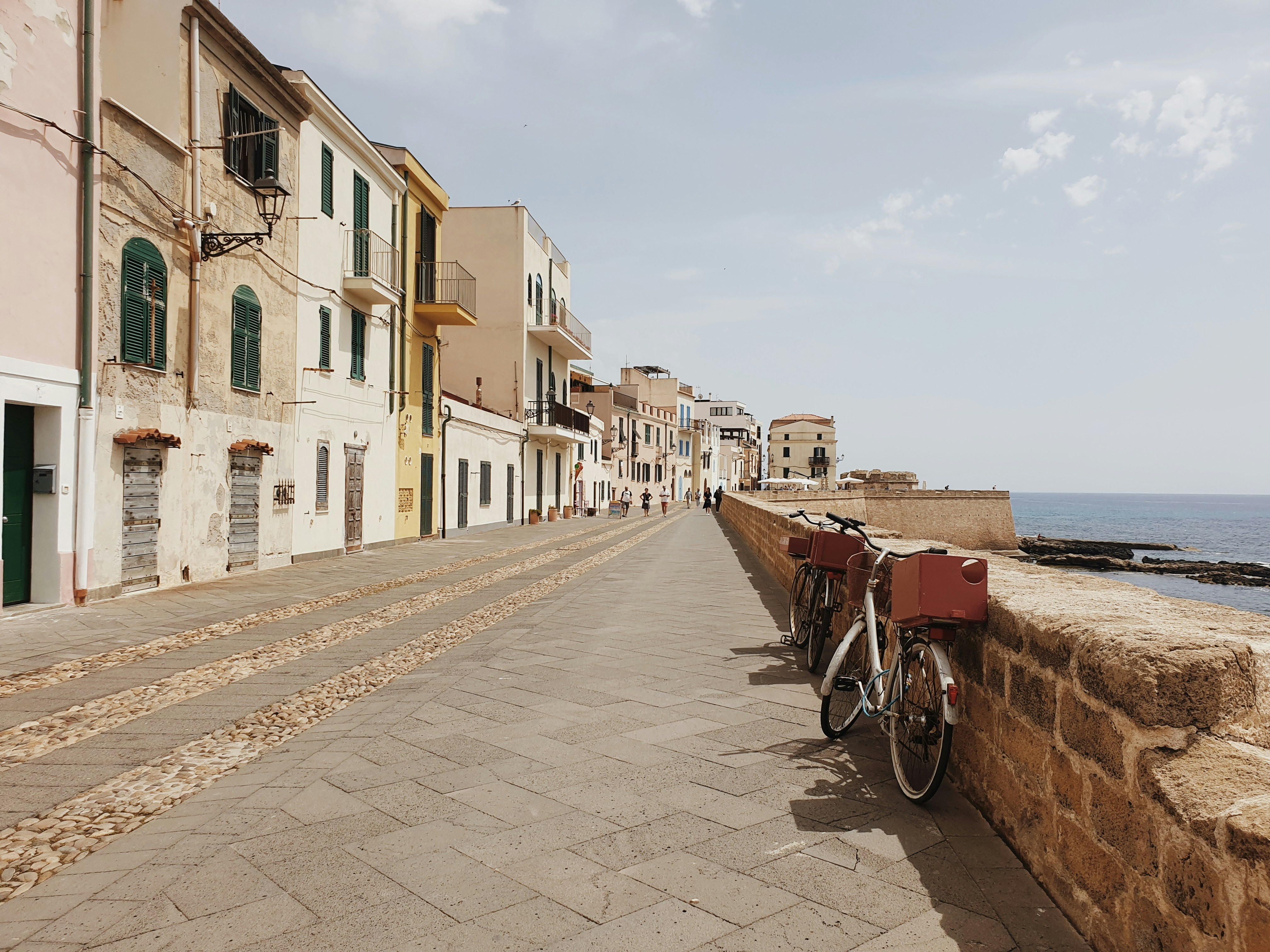
Walk into the old town and read the street signs. Many of them are in two languages, and the second one is not Italian. It's Alguerès, a variety of Catalan that has been spoken here for roughly six centuries.
The history is straightforward and remarkable. In the 14th century the Crown of Aragon took the city, expelled much of the existing population and repopulated it with settlers from Catalonia. The language stayed. So did the architecture, the street plan, the surnames and a good deal of the cooking. Catalans still call the city Barceloneta — little Barcelona.
This is not a heritage performance for visitors. The language is genuinely, if precariously, alive. Knowing this before you walk the old town changes what you see: the cobbled lanes stop being generically picturesque and start being evidence.
How to see it: walk without a destination. The historic centre is small enough that you cannot get properly lost, and it rewards wandering more than any specific monument.
The bastioni — the fortifications ringing the seaward side of the old town — are the single best thing to do in Alghero and cost nothing.
Go in the hour before sunset. The walls face west, the light comes in low across the water, and the stone turns the colour of the wine you should be drinking. There are bars built into the ramparts if you want a seat; the walk itself is better.
Practical note The walls run roughly a kilometre. Allow forty-five minutes if you're stopping. Sunset is around 9pm in high summer and closer to 5pm in winter — worth checking, because the walk is transformed by the light and merely pleasant without it.
Beyond wandering, three things are worth deliberate attention.
The cathedral of Santa Maria and its bell tower, which mixes Catalan Gothic with later additions — the architectural record of the city's changes of hands, legible in a single building.
Torre di Porta Terra, the landward gate tower, part of the surviving defensive circuit that also includes several sea-facing towers.
The coral. Alghero sits on the Riviera del Corallo, the coral coast, and red coral has been harvested here for centuries — it appears on the city's coat of arms. The workshops in the old town are still working craft studios, not souvenir stands. If you buy, buy from a workshop that can tell you where the piece came from.
Twenty-odd kilometres north-west, the coastline ends in a vast white limestone headland dropping straight into the sea. Capo Caccia is the most dramatic landscape within easy reach of the city, and even if you do nothing else there, the drive and the view justify the trip.
Inside the cliff is Neptune's Grotto, a large sea cave with a saltwater lake, reachable two ways:
Check opening times and sea conditions before committing. The cave closes when the swell is up, and the boat crossing is cancelled more often than visitors expect.
Sardinia is covered with nuraghi — dry-stone towers built during the Bronze Age by a culture that left no written records and no comparable structures anywhere else in the Mediterranean. There are thousands of them across the island, and several within a short drive of Alghero.
The one closest to the city sits near the coast road, a complex of towers and hut foundations that you can walk through in half an hour. Nearby, a rock-cut necropolis — chambers carved into the sandstone, older still than the towers — offers the more unsettling half of the same story.
What makes these sites worth your time is not scale. It's the absence of explanation. Nobody is certain what the towers were for: fortresses, temples, granaries, status symbols, all of the above. You are looking at a civilisation's major achievement without access to its reasoning.
Practical: both sites are small, take under an hour each, and are far better in the morning or late afternoon. There is no shade.
Between Alghero and Capo Caccia lies a large protected bay, Porto Conte, with a regional park behind it — pine and juniper forest, walking and cycling trails, and reintroduced fauna including albino donkeys, which are exactly as improbable as they sound.
North of it is Lake Baratz, generally described as the only natural lake in Sardinia. It's a quiet, unshowy place with a walking loop around it, and it's usually empty. If you want an hour of Sardinia with nobody in it, this is where to go.
Inland from Alghero, the ground rises into low hills, and the beach traffic disappears within about ten minutes of leaving town.
This is one of Sardinia's most distinctive wine areas, and its distinguishing feature is Torbato — a white grape grown here and almost nowhere else in Italy, with a documented relative in Catalonia. It is the same story as the language: something that arrived centuries ago and stayed.
Alongside it: Vermentino on granite and sand, Cagnulari — a native red from the Sassari countryside that came close to extinction — and Cannonau.
For most visitors the practical obstacle is not finding the vineyards but the drive home afterwards. Italian drink-driving limits are strict and enforced, and a proper tasting is not compatible with getting yourself back to town. Plan for that before you go rather than after.
Alghero's cooking is where the Catalan and Sardinian layers are most obvious.
Aragosta alla catalana — spiny lobster with tomato and red onion, served cool. The city's signature dish, and expensive for good reason.
Bogamarì — sea urchin, eaten raw with bread. Strictly winter, subject to seasonal fishing rules, and one of the great food experiences of the Mediterranean. Do not order it in August; if someone offers it to you in August, eat somewhere else.
Paella algherese — the Catalan inheritance, cooked with local seafood.
Fregola with clams — toasted semolina pasta in shellfish broth. Sardinian rather than Catalan, and arguably the best thing on most menus.
Seadas — fried pastry filled with fresh cheese, drizzled with bitter honey. Sweet and savoury at once, and the correct end to any meal here.
If you have a full day, take the coast road south to Bosa. It runs along cliffs above the sea for the best part of an hour with almost no development, and it is one of the finest coastal drives in Italy.
Bosa itself is a river town of stacked pastel houses beneath a castle, and it has its own wine: Malvasia di Bosa, made in an oxidative style that has more in common with Sherry than with anything else in Sardinia. Unusual, memorable, and difficult to find elsewhere.
Go early, take the road slowly, and eat lunch there.
April to June — the best window. Everything is open, the countryside is green, the heat is manageable and the crowds haven't arrived.
July and August — hot, busy, expensive. Beach weather, and the inland sites become punishing in the middle of the day.
September and October — arguably the finest time. The sea is still warm, the harvest is happening in the vineyards, the light is exceptional and prices fall.
November to March — quiet. Some seasonal businesses close, but the old town is at its most authentic, and this is sea urchin season.
Most Mediterranean coastal towns are one thing pretending to be several. Alghero is genuinely several things at once: a Catalan city on a Sardinian island, a fishing port that became a resort, a wine region that most wine drinkers have never heard of, and a landscape with Bronze Age towers standing in fields where people still grow grapes.
The beaches are excellent. But they are the least unusual thing here.
We'll take you to discover producers and wineries. Private transfer included.
Discover our experiencesYes — arguably more so. Spring and early autumn offer better weather for walking and sightseeing, lower prices and fewer crowds, and autumn coincides with the grape harvest. Winter is quiet but it is also sea urchin season.
The city was taken by the Crown of Aragon in the 14th century and repopulated with Catalan settlers. Their language, Alguerès, has survived there for roughly six hundred years and is still spoken today.
Either by boat from Alghero port or on foot down a stairway of several hundred steps cut into the cliff at Capo Caccia. Both depend on sea conditions, and the cave closes in rough weather.
Yes. The hills inland from the city are a working wine area producing Vermentino, Torbato and Cagnulari. Visits generally need to be arranged in advance, and transport should be planned given drink-driving limits.
Catalan-influenced dishes such as lobster alla catalana and local paella, alongside Sardinian staples like fregola with clams and seadas. In winter, raw sea urchin is the local speciality.
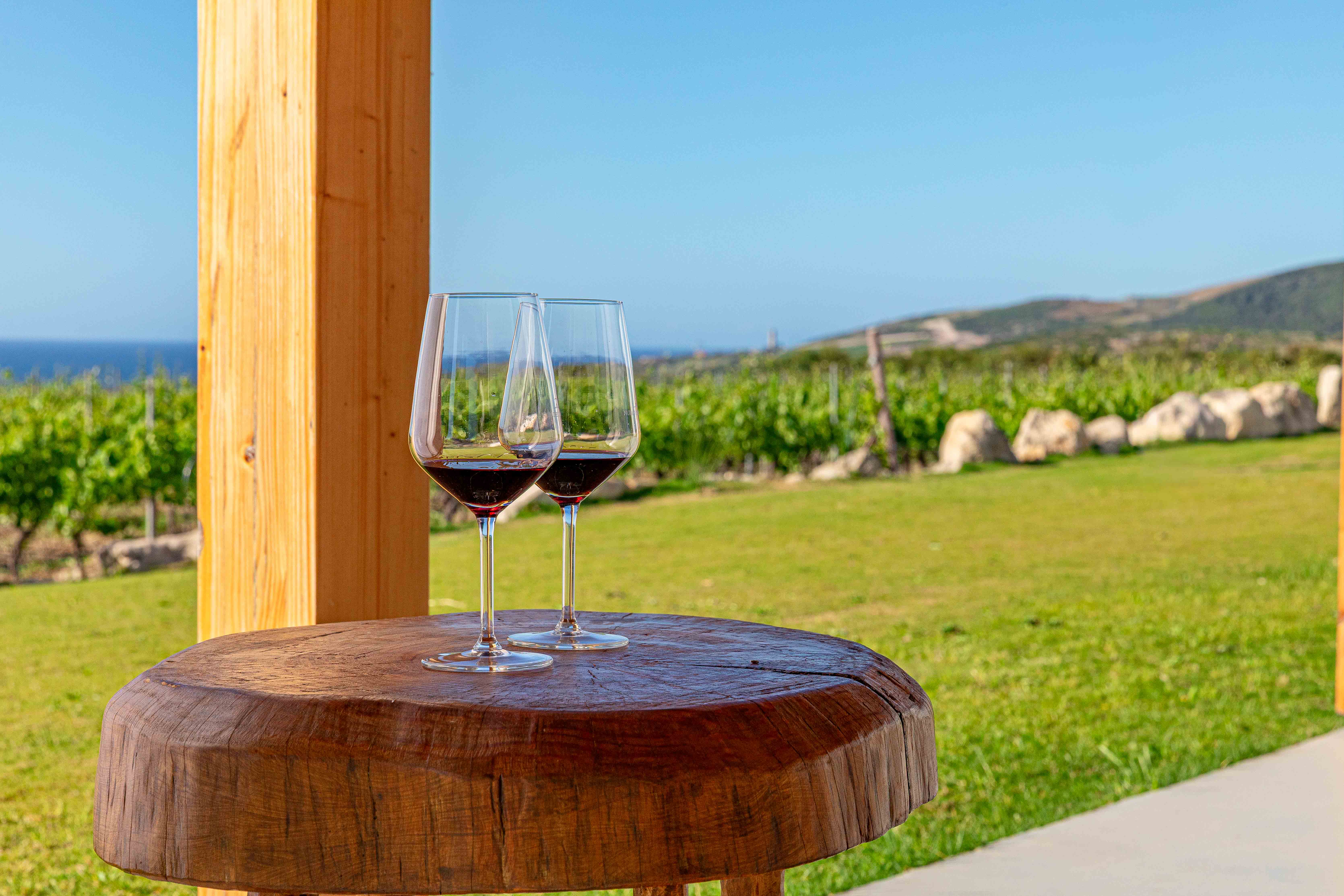
No signposted routes, no walk-ins: wine tasting in Sardinia works differently. How to book it, what to expect, and the problem nobody plans for.
Read the article→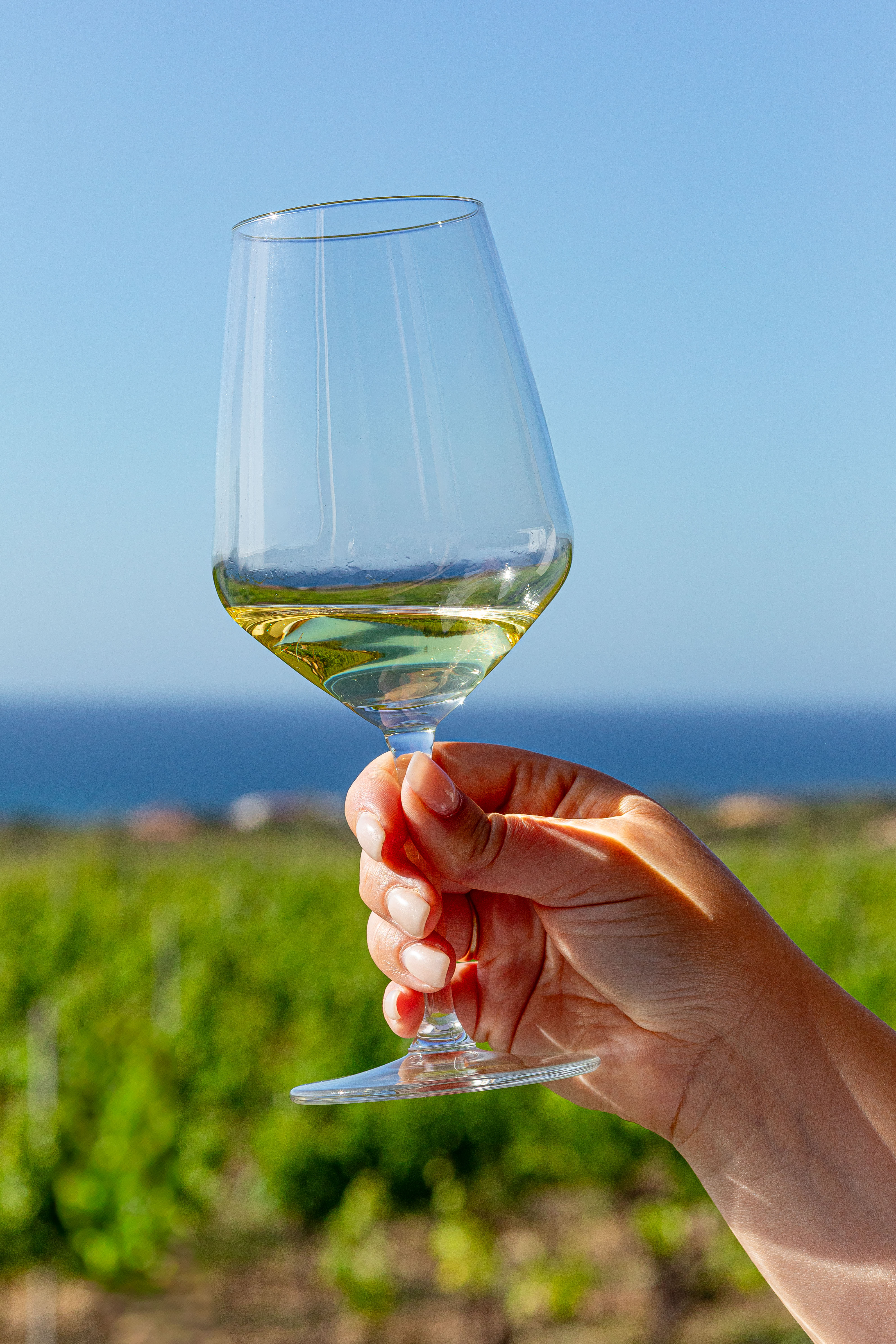
The island's best-loved white wine, from vineyard to glass
Read the article→We take you directly to the producers, with private transfer included and in small groups.
© 2026 Henosis. Tutti i diritti riservati.
Henosis