
Pour a glass of Torbato in Alghero and you are drinking something that exists almost nowhere else on earth. Not a marketing line — a fact of geography. This white grape, once scattered across the western Mediterranean, has quietly vanished from every place it used to grow. Every place but one.
Most people have never heard of it, and that is exactly the point. By the end of this article you will know where Torbato came from, why it survives only here, what it tastes like, how to serve it and what to eat with it — and why it has become a quiet point of pride for anyone who takes Sardinian wine seriously.
Torbato is not, strictly speaking, a native Sardinian variety — and that is part of what makes its story compelling. Ampelographers place it within the broad family of the Malvasias, the aromatic white grapes whose origins trace back to the eastern Mediterranean and the Aegean basin. From there it travelled west along ancient trade routes, taking root along the Iberian coast and in the south of France.
It reached Sardinia during the Catalan-Aragonese period, between the fourteenth and fifteenth centuries, when Alghero became — and in many ways remains — a Catalan city. In old vine catalogues the grape surfaces under names that betray this wandering past: uva catalana, Turbat, even the Latinised Vitis iberica. In the Roussillon, in southern France, it was long known as Malvoisie du Roussillon.
Here is the twist. In its supposed homelands — eastern Spain, the Roussillon — Torbato has all but disappeared. The variety was difficult and low-yielding, and growers elsewhere gradually replaced it with easier grapes. Only in the Nurra, the sun-baked plain northwest of Alghero, did it hold on. What was once a Mediterranean grape is now, effectively, an Algherese one.
The answer lies in the ground and the sky. The Nurra offers Torbato exactly what it needs: calcareous-clay soils, sandy sediments of ancient marine and wind-blown origin, and a hot, dry climate cooled by sea breezes. On these soils the grape produces wines of unusual aromatic definition and a saline backbone that reflects the nearness of the sea.
There is also a human reason. Torbato survived the twentieth century because a handful of local growers refused to let it go, propagating it through their nurseries when commercial logic pointed the other way. Without that stubbornness the grape would almost certainly have followed the same path to extinction it took everywhere else. Today its cultivation is confined to a small area — historically around ninety hectares — which is precisely why you will rarely see a bottle beyond the region.
Torbato is protected under the Alghero DOC, established in 1995 and currently regulated by the ministerial decree of 7 March 2014. Rather than a wall of numbers, here is what the disciplinare actually sets out.
Alghero DOC TorbatoGrape compositionMinimum 85% Torbato, up to 15% other white grapes permitted in SardiniaProduction zoneAlghero, Ittiri, Olmedo, Ossi, Tissi, Usini, Uri and part of SassariMaximum grape yield140 quintals per hectareGrape-to-wine yieldMaximum 70%Minimum alcohol11% vol (still); 11.5% vol (sparkling)Official stylesStill white (Torbato) and sparkling (Torbato Spumante)
That sparkling version is worth pausing on. Harvested a little earlier to preserve acidity, Torbato has proved to be a natural base for traditional-method sparkling wine, carrying the nervy freshness that long lees ageing demands. It is one of the most interesting — and least expected — sparkling wines on the island.
Pour it and the first thing you notice is the colour: a bright straw yellow, sometimes with faint greenish reflections, tending toward gold with a little age.
On the nose it is aromatic without being showy — yellow flowers, Mediterranean scrub, ripe orchard fruit, occasionally a whisper of citrus and wild herbs. The palate is where it earns its reputation: dry, fresh, with real texture and a saline, almost briny quality, closing on a gently bitter almond note that is a signature of the grape.
This is a white with structure, not a throwaway aperitif wine. It has weight across the middle of the tongue and a finish that lingers — closer in seriousness to a good Vermentino than to the anonymous coastal whites it often sits beside on a list.
Practical notes
Temperature: 10–12°C. Colder than this and you shut down the most interesting aromatics, leaving only acidity.
Glass: a medium tulip, short-stemmed and slightly bulbous. The wine needs surface area to open.
Opening ahead: straight from a cold fridge, give it ten minutes on the table. Torbato served too cold is Torbato half-tasted.
Ageing: the best still versions develop for several years, gaining depth and a honeyed richness. You cannot tell from the label which bottles will keep — ask the person who made it.
The most frequent error is serving Torbato too cold, which flattens its aromas and hides its texture. The second is treating it as an anonymous "Sardinian white" — it deserves the attention you would give a serious wine, not a beach pour. The third is assuming that, because it is white and Mediterranean, it must be soft and simple; its saline freshness and structure make it a wine that stands up to real dishes. And the last: do not go looking for it back home. Outside Alghero, it is genuinely hard to find.
This is a wine built for the Sardinian coast, and its natural partners come straight from the sea. Its saline freshness and gentle bitterness make it ideal with:
Bottarga. Cured mullet roe, grated over pasta or sliced thin with oil. Savoury, salty, faintly bitter — and Torbato's acidity and almond finish meet it head-on.
Raw seafood. Oysters, sea urchins in season, carpaccio of local fish. A cold glass keeps it all clean and precise.
Grilled and fried fish. The wine's acidity cuts the richness of anything fried; its texture stands up to whole roasted white fish.
Seafood risottos and delicate pasta. Enough body to match the dish without flattening it.
The still version handles the richer preparations; the sparkling is superb as an apéritif with fried nibbles or across a whole seafood meal. What to avoid: heavy cream sauces, long-braised red meat, anything strongly sweet.
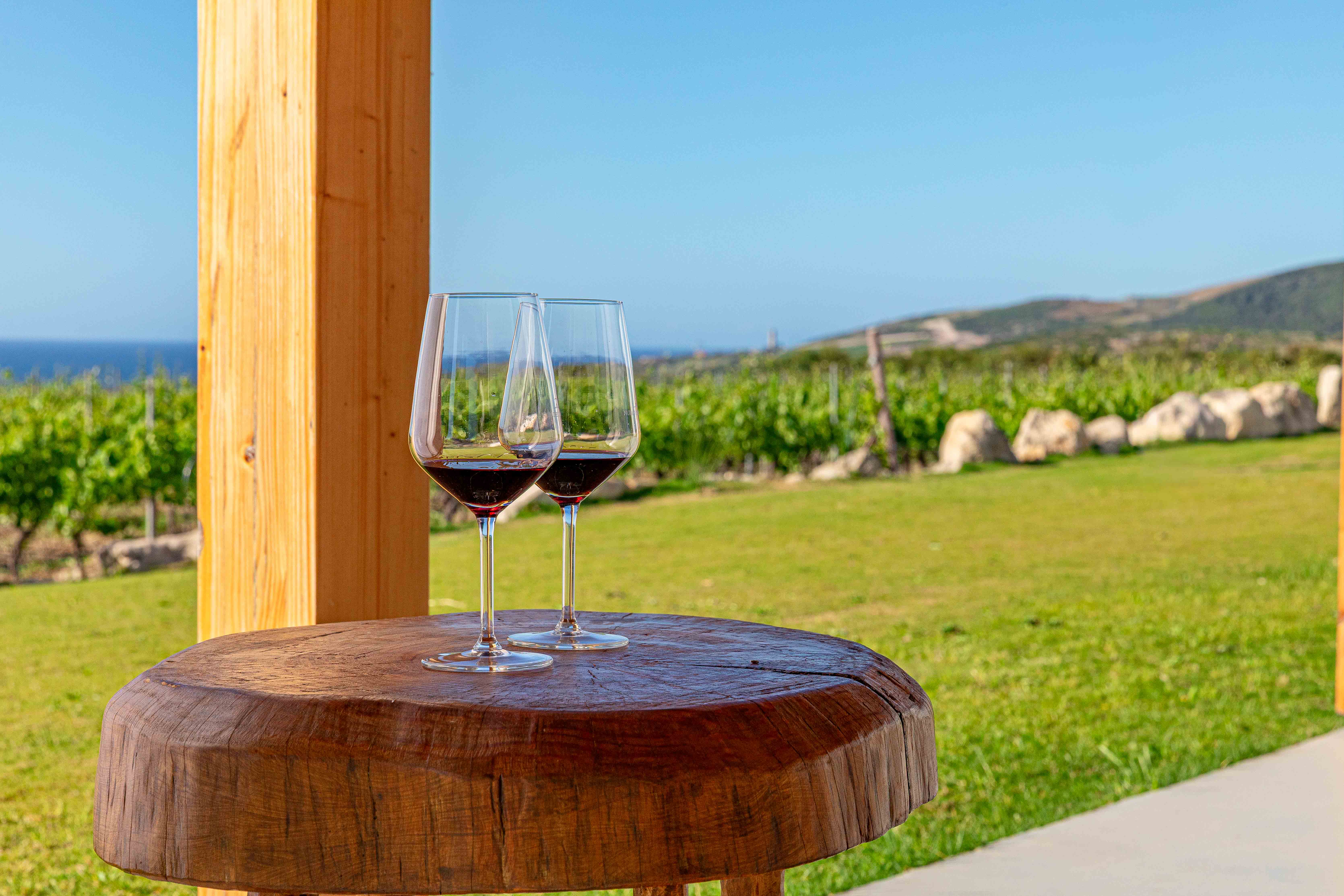
Most wines travel. Torbato mostly doesn't. To drink it at its best you more or less have to be here, in Alghero, where the Catalan street signs and the salt in the air explain the wine before you have taken a sip. That is not a limitation — it is the whole point. In a wine world where the same grapes turn up everywhere, Torbato is one of the last that still belongs to a single place. Raise a glass of it looking out over the Nurra, and you are tasting six centuries of Alghero in the act of not disappearing.
We'll take you to discover producers and wineries. Private transfer included.
Discover our experiencesTorbato is grown almost exclusively around Alghero, in northwest Sardinia, within the Alghero DOC zone. Although the grape once grew in Spain and southern France, it has largely disappeared elsewhere, making Alghero effectively its last home.
Torbato is a dry white with an aromatic nose of yellow flowers, Mediterranean scrub and ripe orchard fruit. On the palate it is fresh and saline, with real texture and a characteristic bitter-almond finish. It is a structured white, not a simple aperitif wine.
Not originally. Torbato belongs to the Malvasia family and reached Sardinia during the Catalan-Aragonese period, between the fourteenth and fifteenth centuries. Because it has survived only here, it is now closely identified with Alghero.
Yes. The Alghero DOC recognises a Torbato Spumante alongside the still wine. Harvested early to keep its acidity high, Torbato makes an excellent base for traditional-method sparkling wine and is one of Sardinia's most distinctive bubbles.
Torbato is made for seafood: raw fish, oysters and sea urchins, spaghetti with bottarga, grilled white fish, fried seafood and seafood risottos. Its saline freshness and gentle bitterness cut through richness beautifully.
No signposted routes, no walk-ins: wine tasting in Sardinia works differently. How to book it, what to expect, and the problem nobody plans for.
Read the article→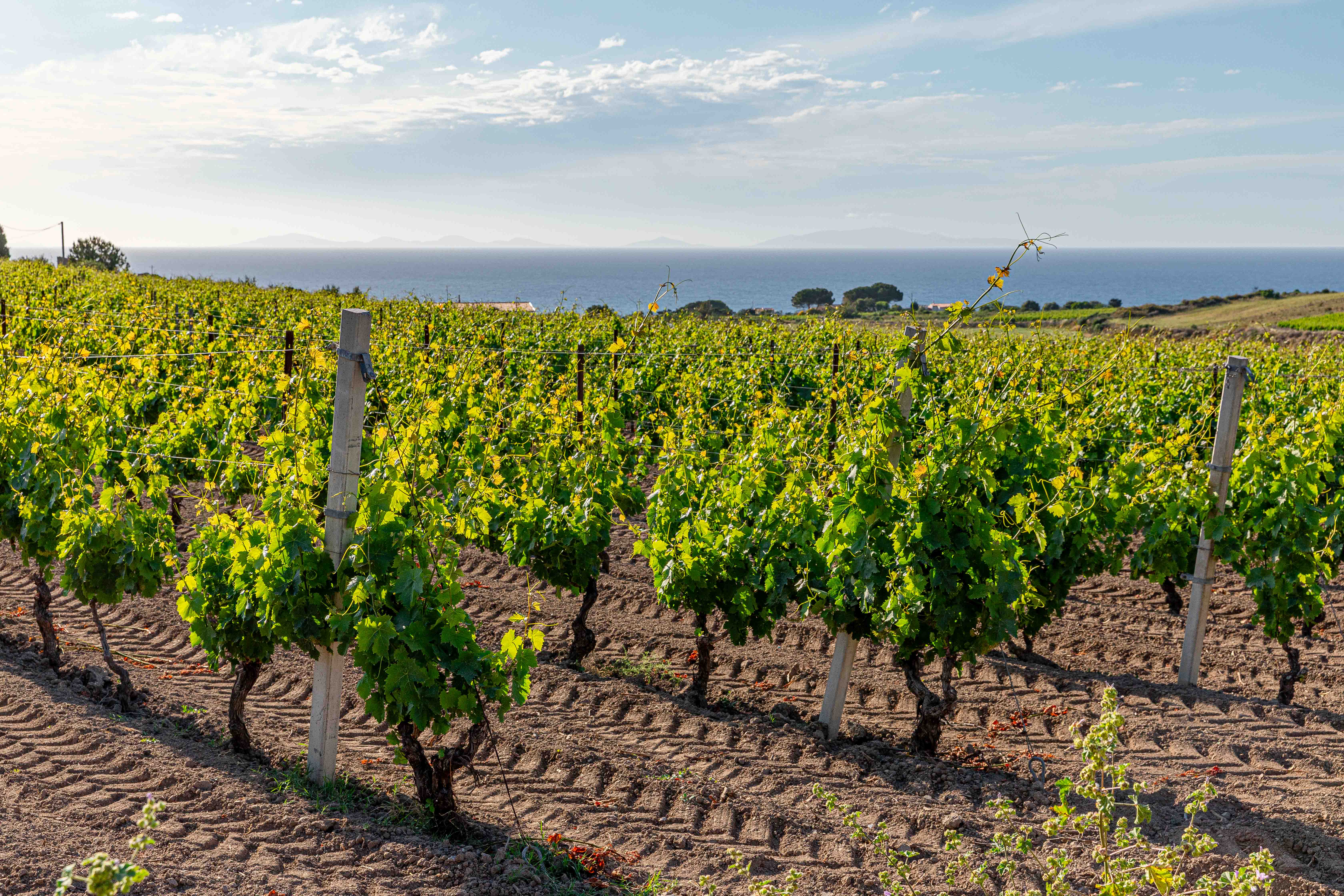
Vermentino, Torbato, Cagnulari: the grapes that grow here and almost nowhere else on earth
Read the article→We take you directly to the producers, with private transfer included and in small groups.
© 2026 Henosis. Tutti i diritti riservati.
Henosis