
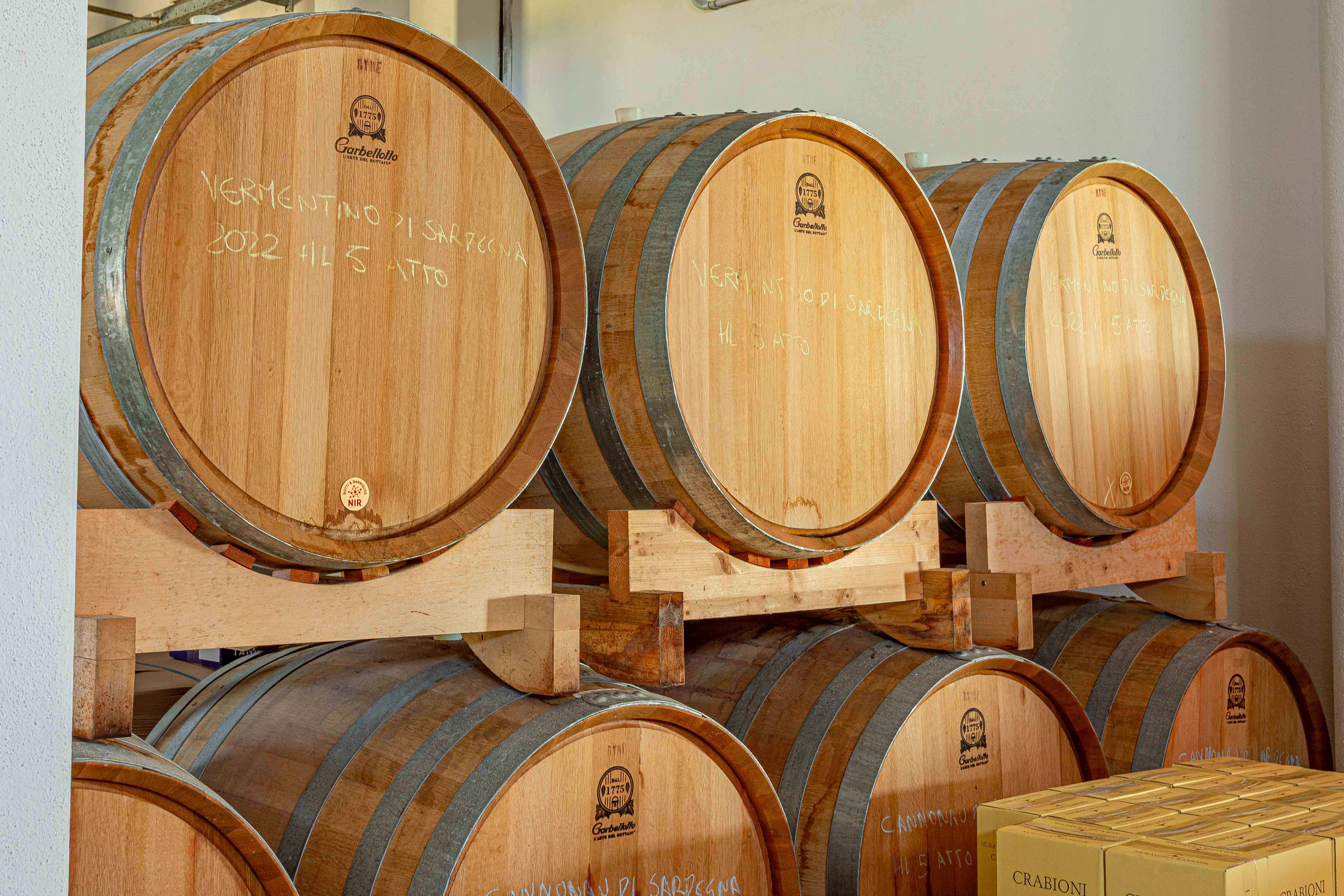
You're standing in front of a shelf of Sardinian wine — or holding a bottle someone just handed you at dinner — and the label is a small wall of Italian. A grape name you half-recognise, a string of capital letters, a word like Riserva or Classico, a place you can't place. What actually matters here, and what's just decoration?
Good news: an Italian wine label follows a logic, and once you know the handful of terms that carry real information, you can read any Sardinian bottle in under two minutes. Here's how to decode one — and, just as useful, what not to read too much into.
The biggest word on the label is usually one of two things: the grape or the appellation (the protected origin). On Sardinian bottles it's very often the grape, because the island's wines are built around distinctive native varieties. The names worth knowing:
Often the grape and the place are fused into the appellation itself — Vermentino di Sardegna, Cannonau di Sardegna, Vermentino di Gallura. That single phrase tells you both what it's made of and where it's from.
This is the string of capital letters, and it's the part that confuses people most. It's Italy's origin system, and it works in tiers. Here's what each actually means.
One myth to drop right away: these tiers are not a simple quality ranking. DOC and DOCG impose stricter rules on origin and production, but a producer may deliberately choose IGT to make something excellent that doesn't fit the appellation's rules — an unconventional blend, say. Plenty of superb Sardinian wine is labelled IGT by choice, not by failure. Treat the classification as information about rules and origin, not a star rating.
(You may also see the European equivalents: DOP covers DOC and DOCG, IGP covers IGT. Same thing, different letters — Italian producers can use either.)
These qualifiers appear after the appellation and each carries a specific, legally defined meaning. They're worth knowing because they genuinely tell you something.
None of these is marketing fluff — they're regulated terms. If they're on the label, they mean what they say.
Lower down, or on the back, a few more useful details:
A two-minute checklist
Run those six and you know more about the bottle than most people in the shop.
The first is reading the classification as a quality score — IGT isn't "worse" than DOC, it's freer. The second is chasing the biggest or oldest-looking word; the real information is in the appellation and the qualifiers, not the font. The third is ignoring alcohol and vintage, which quietly tell you more about how the wine will taste than any marketing term. And the fourth, specific to Sardinia: assuming a familiar word means what it does elsewhere — Sardinian Vernaccia is a world apart from Tuscan Vernaccia, and Cannonau wears Grenache's clothes in its own way.
A label can tell you origin, rules, ageing and style — genuinely useful things, and now you can read all of them. What it can't tell you is the one that matters most: whether you'll like what's inside. That part only happens in the glass, ideally with someone who can explain why this Vermentino tastes of salt or why that Cannonau carries the scent of the hills it grew on. The label gets you to the right bottle. Tasting it where it's made turns the words into something you'll remember.
We'll take you to discover producers and wineries. Private transfer included.
Discover our experiencesDOC stands for Denominazione di Origine Controllata. It means the wine comes from a defined area and follows set rules on grapes and production. Most of Sardinia's classic wines — Vermentino di Sardegna, Cannonau di Sardegna, Alghero DOC — fall in this tier.
Yes — exactly one. Vermentino di Gallura, from the north-east of the island, is Sardinia's only DOCG, the top classification, with the strictest rules and an official tasting check before release.
Not necessarily. IGT is a broader category with more freedom on grapes and style. Some producers choose it deliberately to make excellent wines that don't fit a DOC or DOCG's rules, so IGT should be read as information about rules and origin, not as a quality ranking.
Riserva means the wine has been aged longer than the standard version, often with time in wood, and usually indicates a more structured, serious bottle. The exact minimum ageing is set by each appellation's rules.
The main ones are Vermentino (white), Cannonau (red), Torbato (a rare Alghero white), Carignano (red) and Vernaccia di Oristano (an unusual aged white), plus island grapes like Nuragus, Monica and Cagnulari.
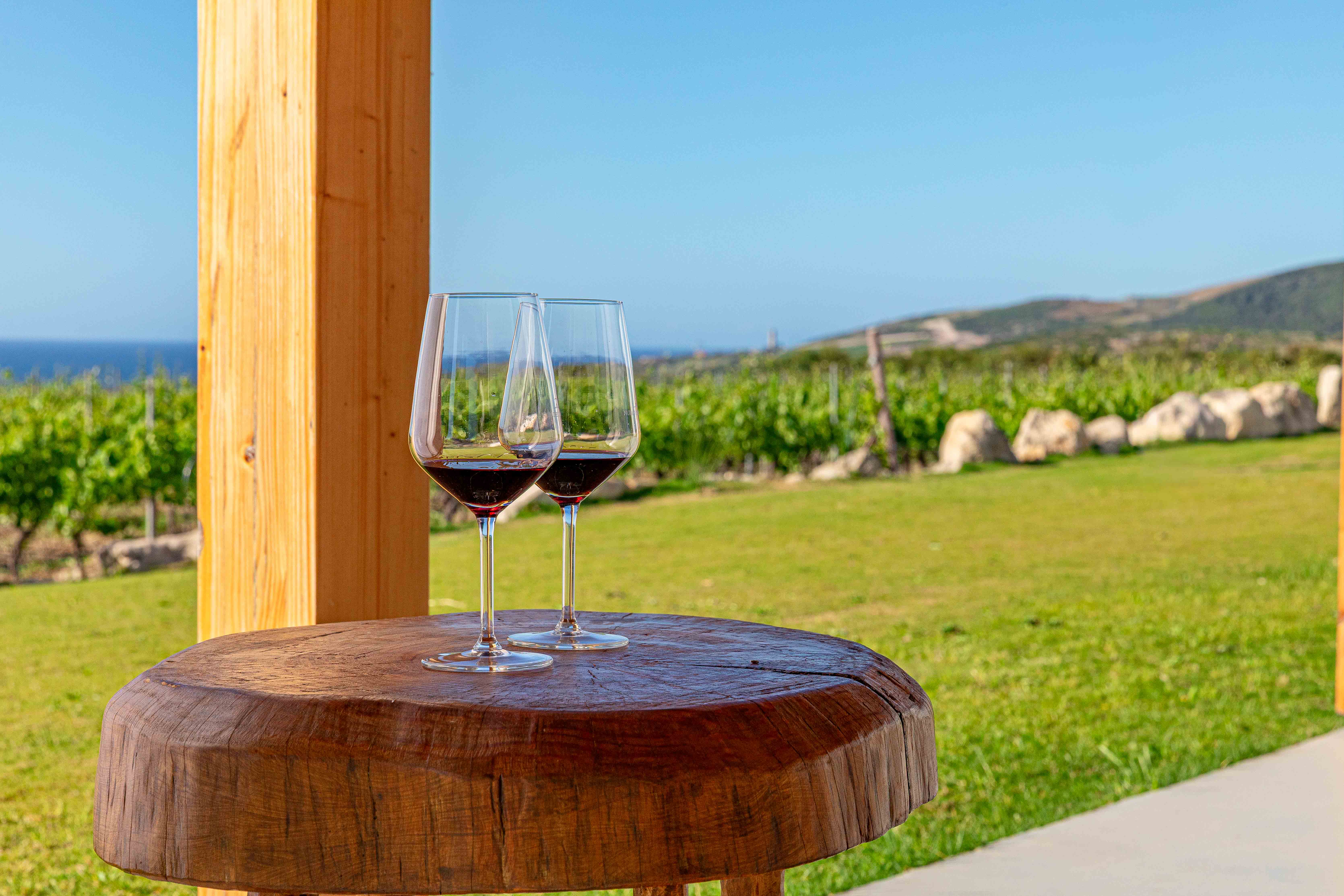
No signposted routes, no walk-ins: wine tasting in Sardinia works differently. How to book it, what to expect, and the problem nobody plans for.
Read the article→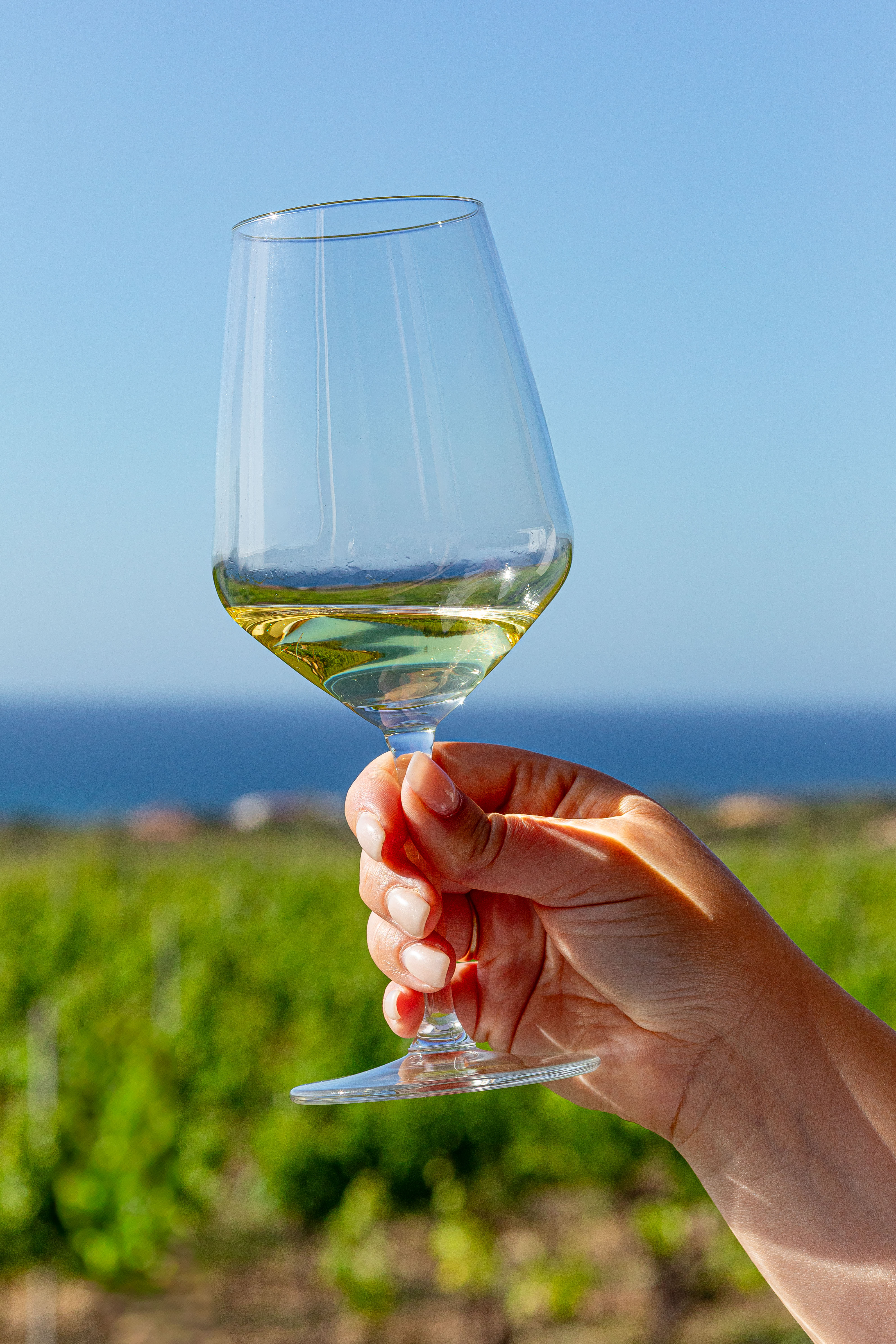
The island's best-loved white wine, from vineyard to glass
Read the article→We take you directly to the producers, with private transfer included and in small groups.
© 2026 Henosis. Tutti i diritti riservati.
Henosis